
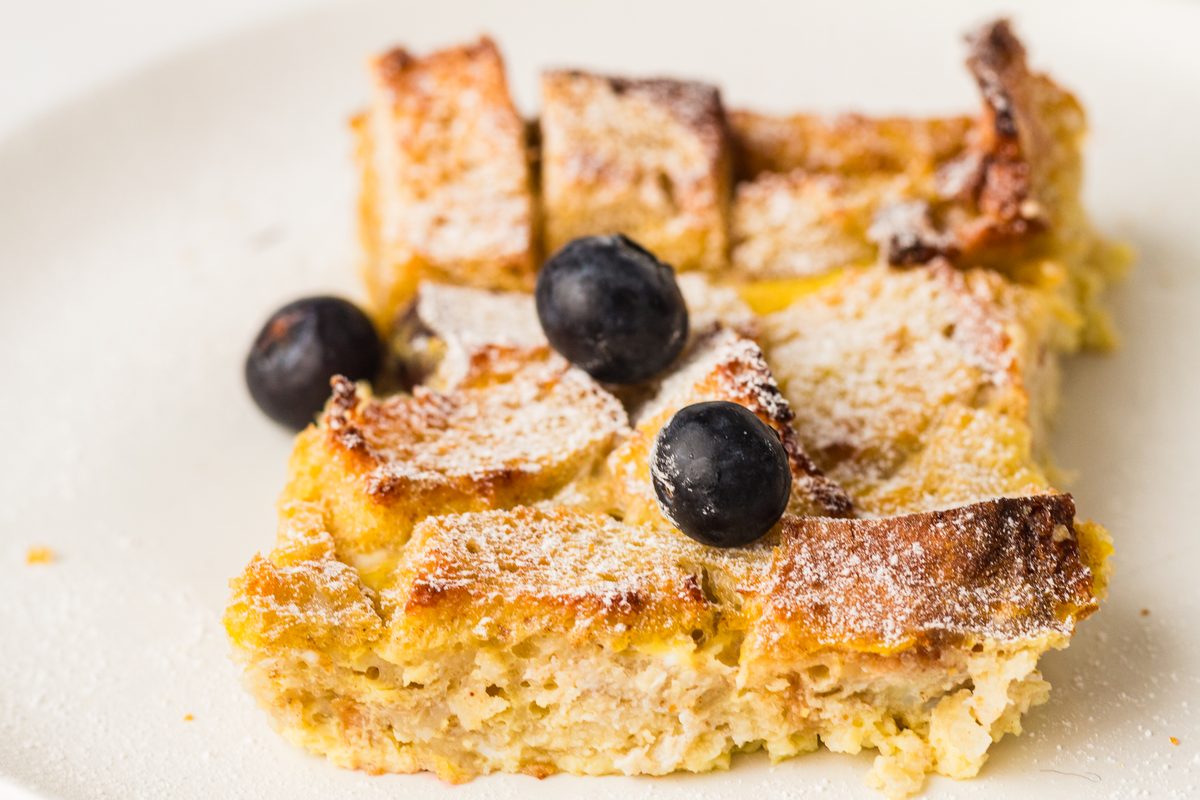
As a homesteader, you all know how much I love my sourdough. It was a love-hate relationship at first, but isn’t that true for all of us?
Once I nailed down sourdough starter and the traditional bread recipes, I moved on to more difficult (and delicious) recipes, and I can honestly say that this casserole is one of my favorites.
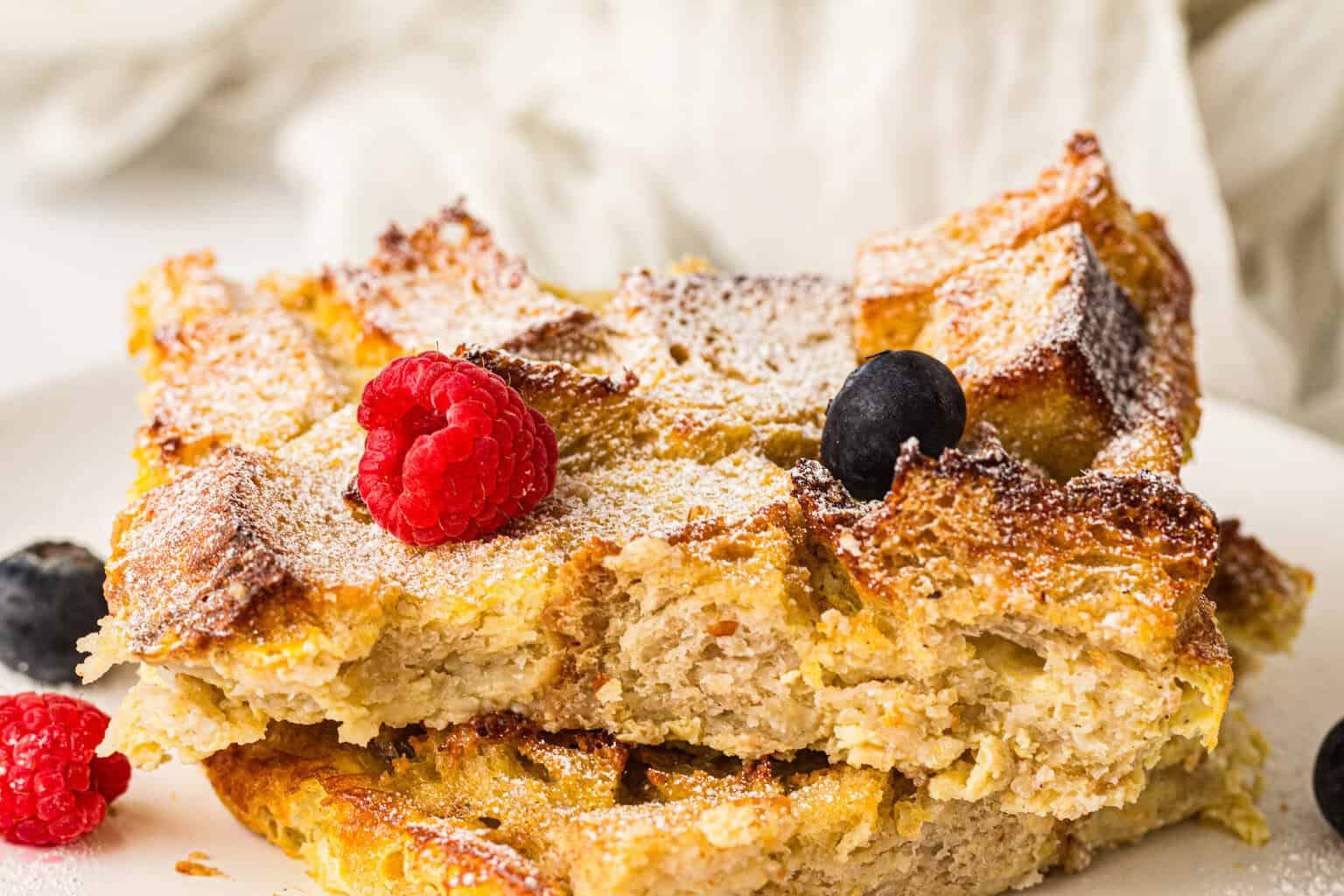
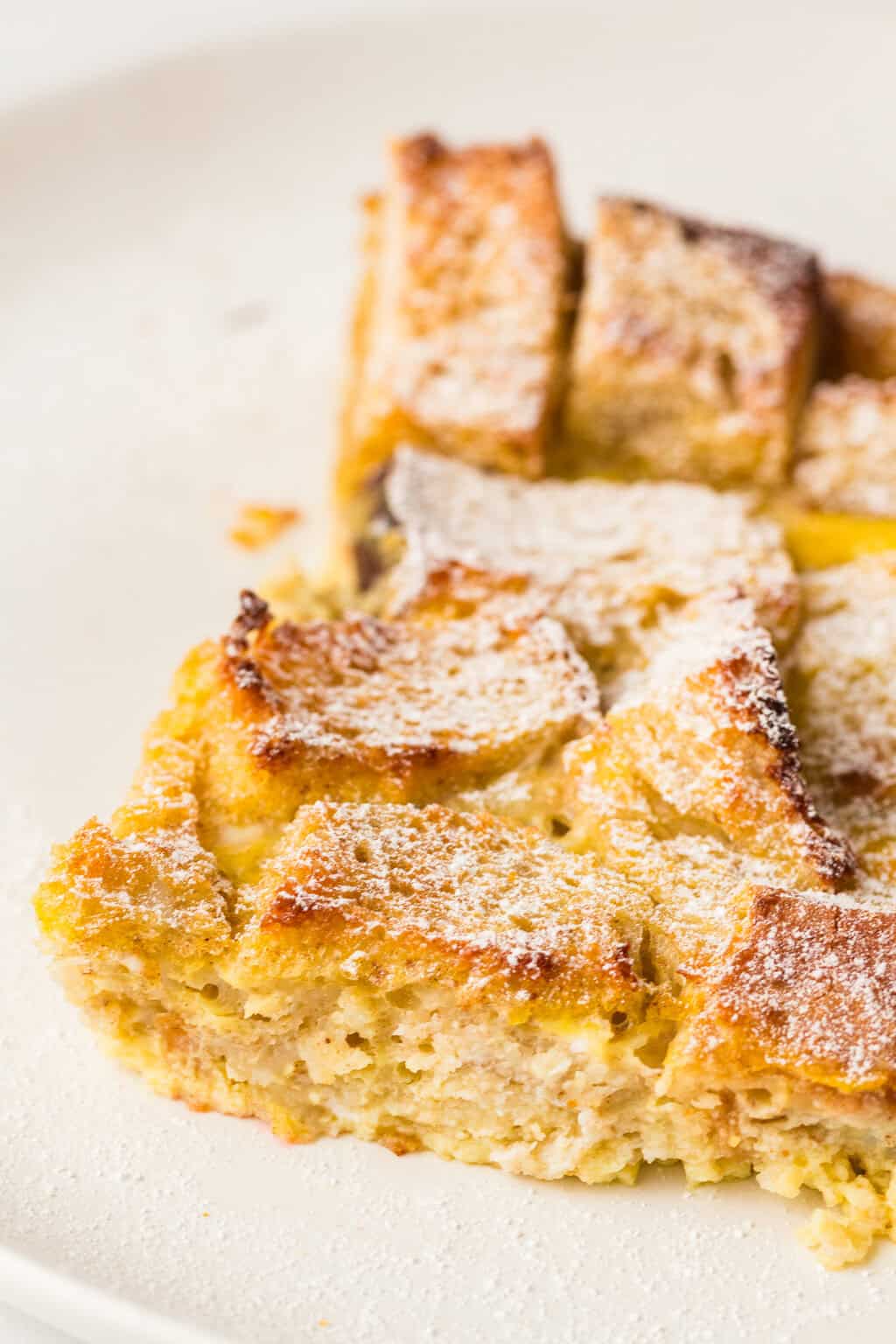
This is the sourdough french toast casserole is perfect for cozy mornings, so as winter approaches, put this on your to-do list. You’ll love it, your kids will love it, and you can even toss some of these bad boys in the freezer for a later date.

It takes ten minutes of work to make this, and if you have chickens, this is a great use of those eggs that tend to go uneaten. Pop it in the oven and it’ll come out golden and puffed at the edges. My favorite is the custardy middle, and the cinnamon and warm butter taste that stays in your mouth long after you’ve finished. It’s perfect for family gatherings because it can feed many.
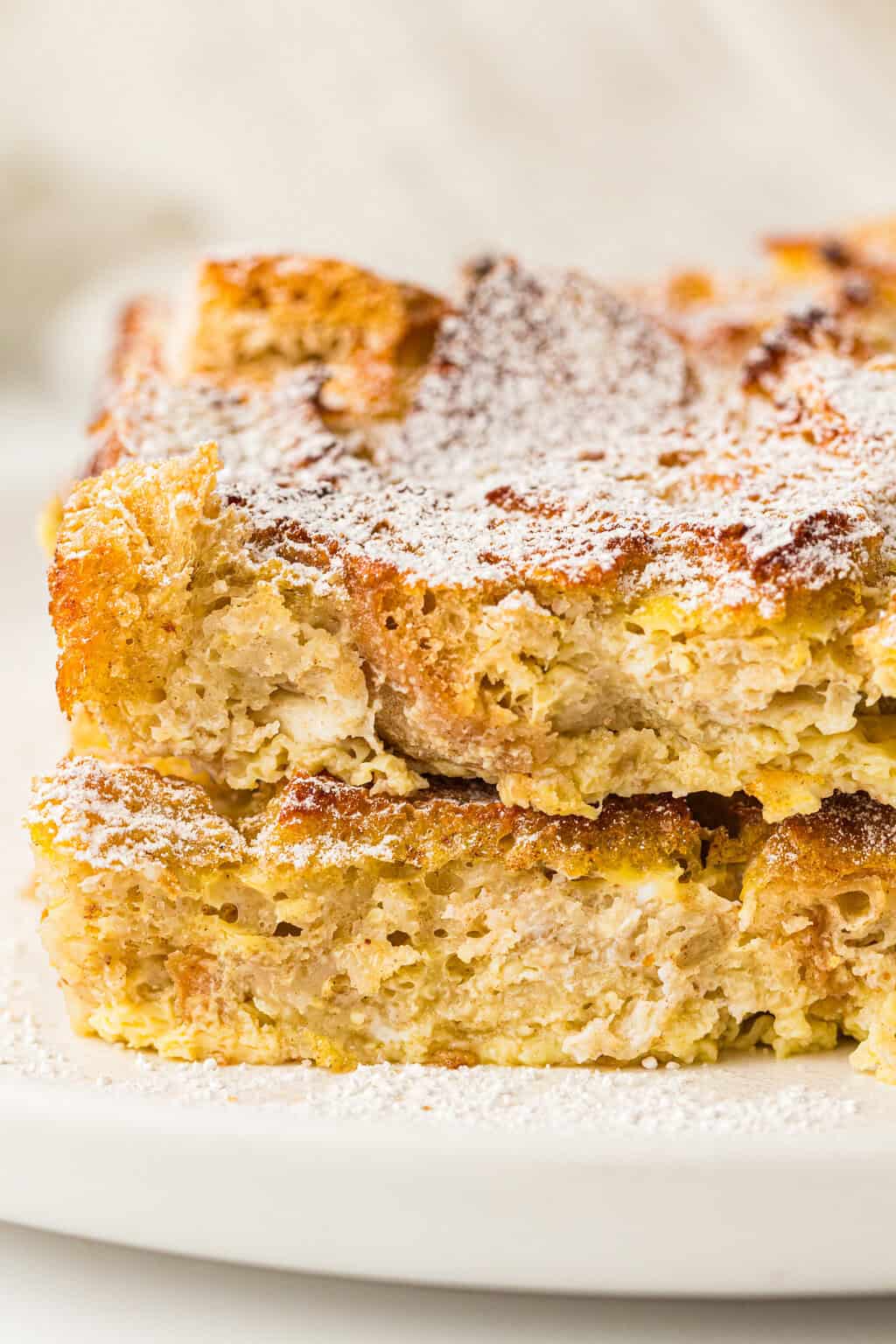
And of course, the best part is that it’s a casserole, so you don’t have to slave away on the skillet for hours trying to make some for the whole family. You just pop this in the oven, and enjoy your coffee until it’s ready to be served. That’s my kind of breakfast dish.
Why Sourdough Is the Right Bread for This
This does NOT need to be a sourdough recipe. You can use any kind of bread whether it’s store bought or homemade. But sourdough is by far the most ideal.
I’ve tried this recipe with other breads, but here are a few reasons why sourdough wins for me:
The crumb structure.
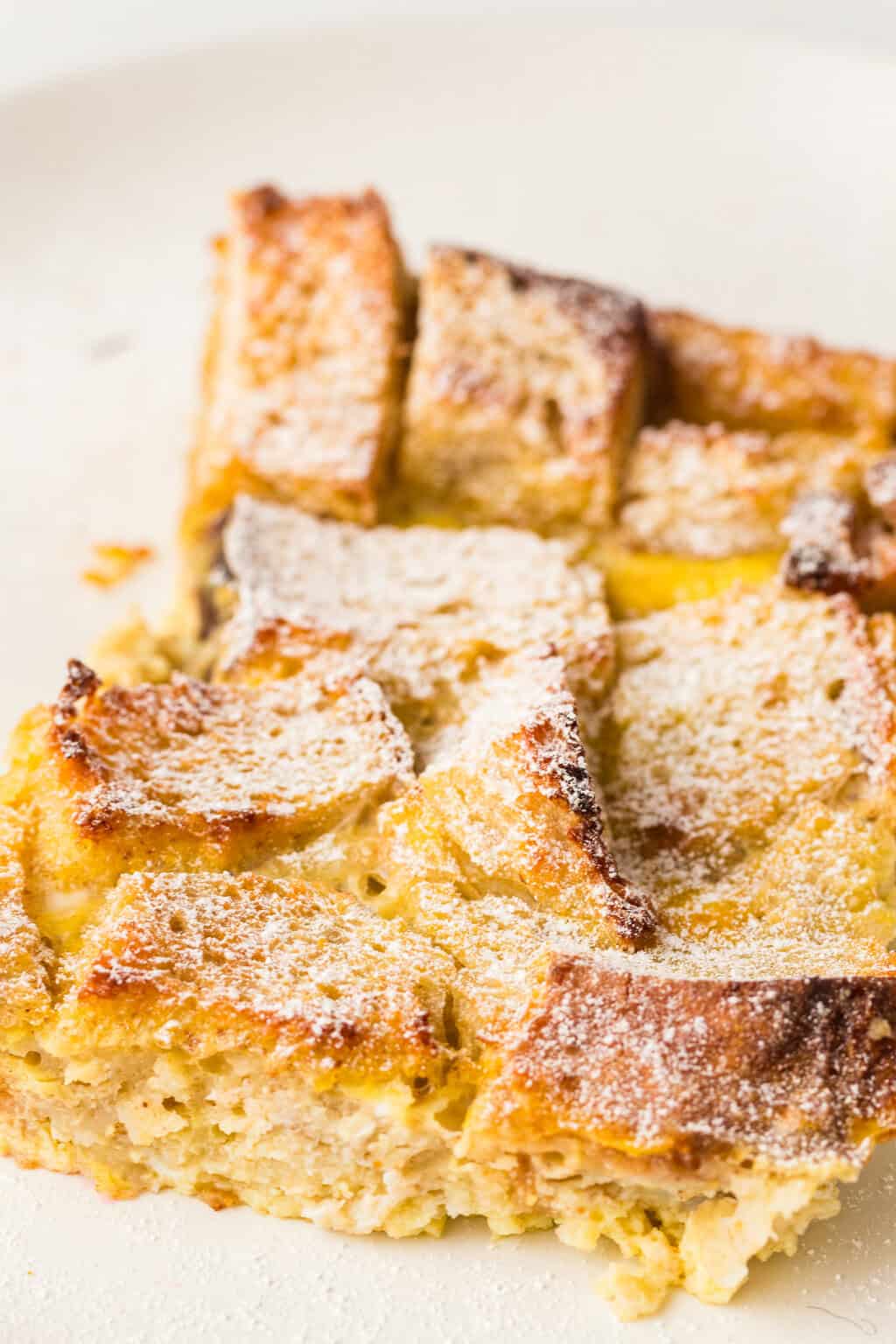
A fermented sourdough has a stronger gluten network than a loaf you’d buy at the grocery store. Not to mention, store bought bread tends to get those open holes throughout.
With your loaf, you can manage those holes and instead create little bread cubes that work like sponges and walls to keep the custard in. I’ve found sourdough is much sturdier so the walls of your casserole don’t collapse. Store-bought bread tends to collapse after soaking.
The sourness.
Your sourdough loaf will add a specific kind of acidity to your dish. It’s mild, of course, but when mixed with the richness of the eggs and milk, it’s the perfect combination.
When that sourness is missing, French toast tends to taste a little eggy. The tang keeps things tasting bright and the sweetness comes in to cut through too much sour.
But the beauty is that you’re only using one tablespoon of sugar. So yes, it’s sweet in the best way, but you’re not sacrificing a relatively healthy dish. I love giving this recipe to my kids because I know it’s not just pure sugar.
Staleness.
I’m including this because I’m a total nerd when it comes to food science, but I also think it’s important to understand for most people when creating these recipes. So here goes..
When bread turns stale, the starch molecules inside are recrystallizing, and they squeeze out moisture as they do. This creates a “thirsty” loaf of bread, which means that when I add my custard, it’ll soak in nicely and quickly.
On the contrary, if you use fresh baked bread, the custard won’t soak in as easily and it’ll usually just sit on the surface or drain to the very bottom of the dish. This is what causes a soggy bottom and dry top, if you’ve ever tried one of these recipes before.
So the bread you use is totally going to make or break that, unless you’re okay with a soggy bottom and dry top.
What You Need
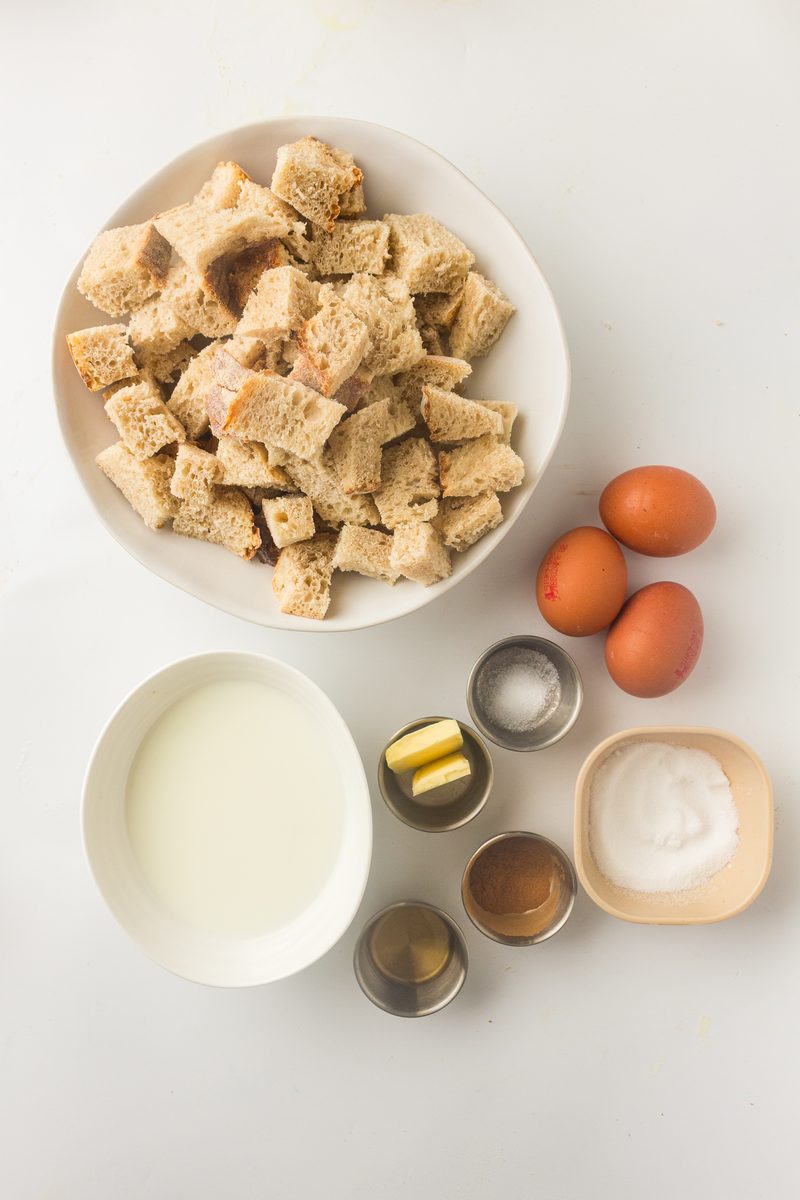
- 8 slices sourdough bread, cut into cubes (about 12 cups)
- 3 large eggs
- 3/4 cup whole milk
- 1 tablespoon granulated sugar
- 1 teaspoon vanilla extract
- 1/2 teaspoon ground cinnamon
- 1/4 teaspoon salt
- 2 tablespoons butter, for greasing the baking dish
A Few Notes on the Ingredients
Bread
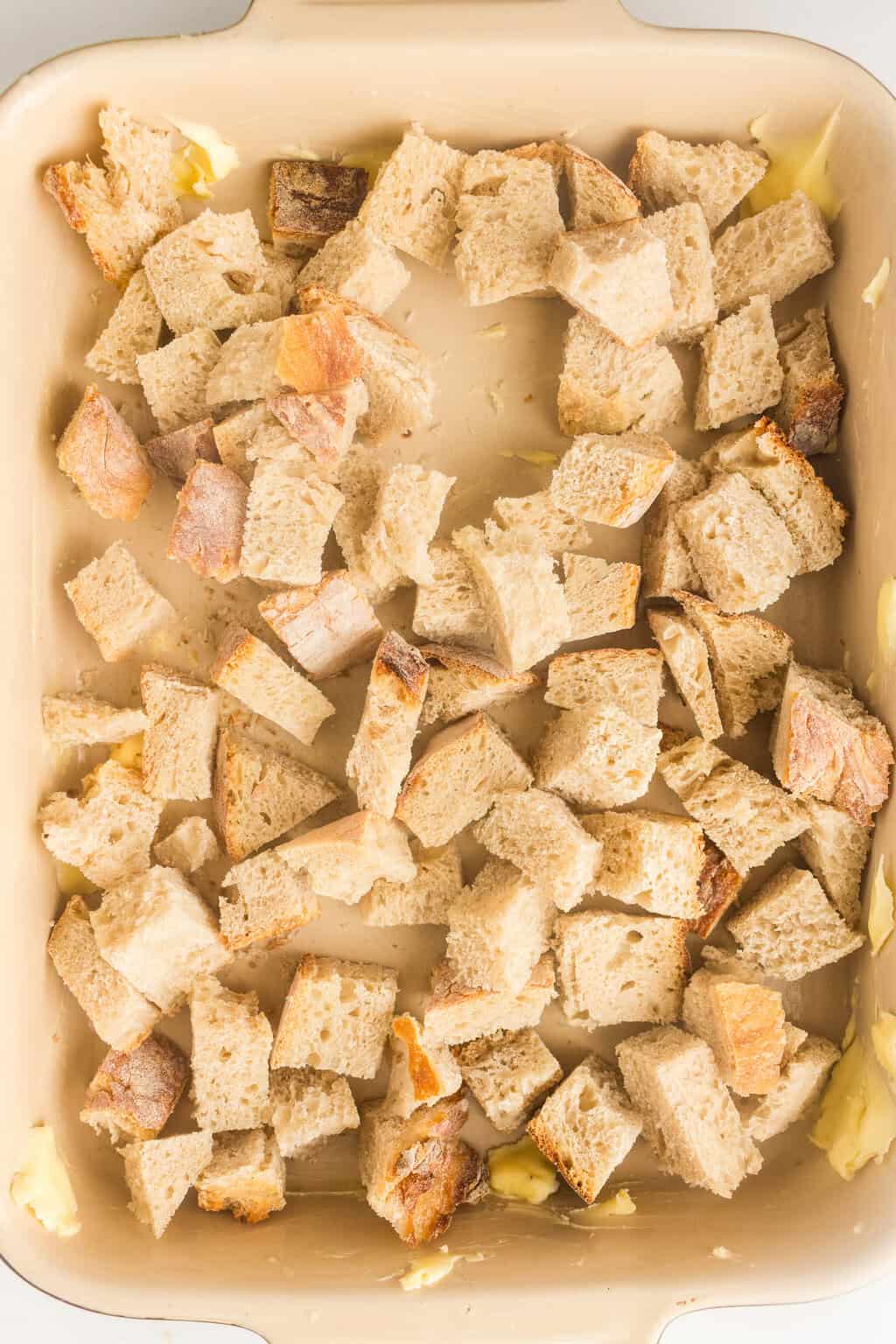
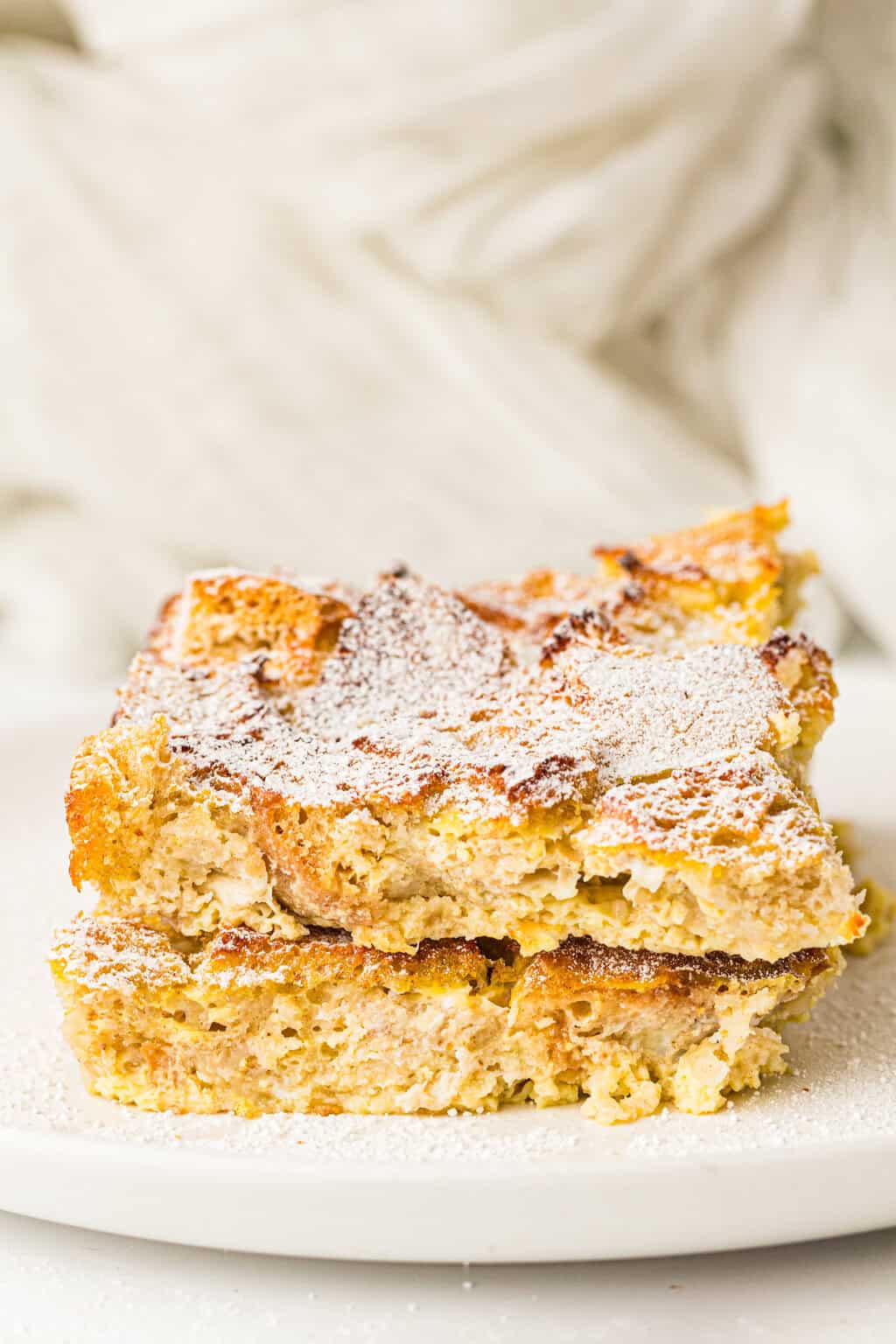
Take your loaf and cut it into one-inch cubes (shown below). Don’t skip on the parts of the loaf with the crust because those bites will give you those chewy, browned corners that are absolutely delectable.
If you decide to use fresh bread instead of a loaf that’s slightly stale, spread the cubes on a sheet pan and dry them in the oven at 300°F for about 10 minutes. And then let them cool down. Stale is important for this recipe.
Eggs
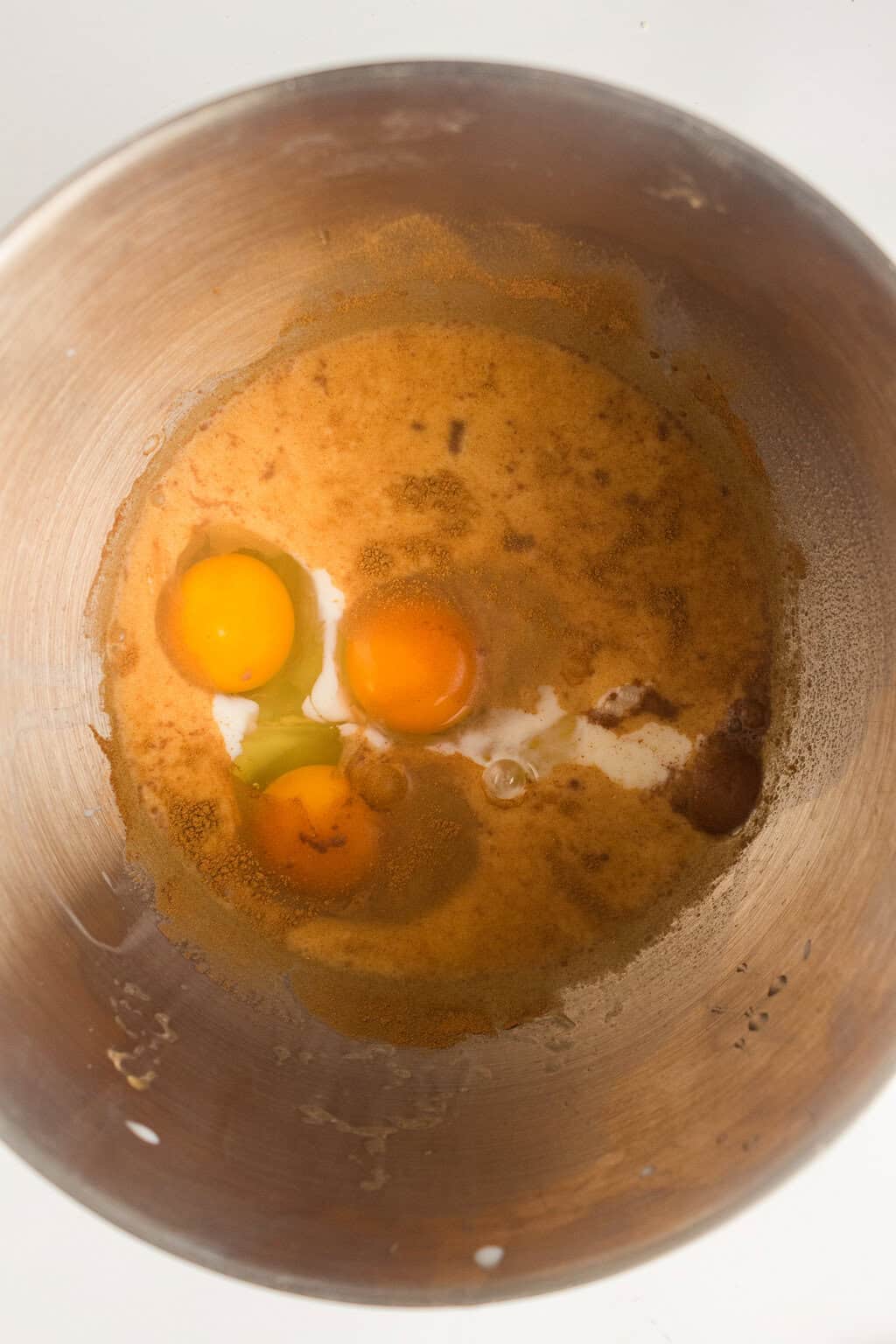
Mix together three large eggs with 3/4 of a cup of milk to create the perfect custard ratio. It’ll set and let the sourdough taste like sourdough. But if you like richer, more bread-pudding style casseroles like this, I have details for you below.
Milk
Use whole milk here, if you have it. The fat will coat the egg and cause them to bond loosely, which helps keep your custard tender rather than rubbery, which we all know can make a HUGE difference.
If you decide to use skim milk, it will still work, but it will be noticeably firmer.
Salt
For salt, use 1/4 teaspoon and don’t skip this. Salt will strengthen the egg protein so the custard will set, and it makes the cinnamon and vanilla flavors pop.
Butter
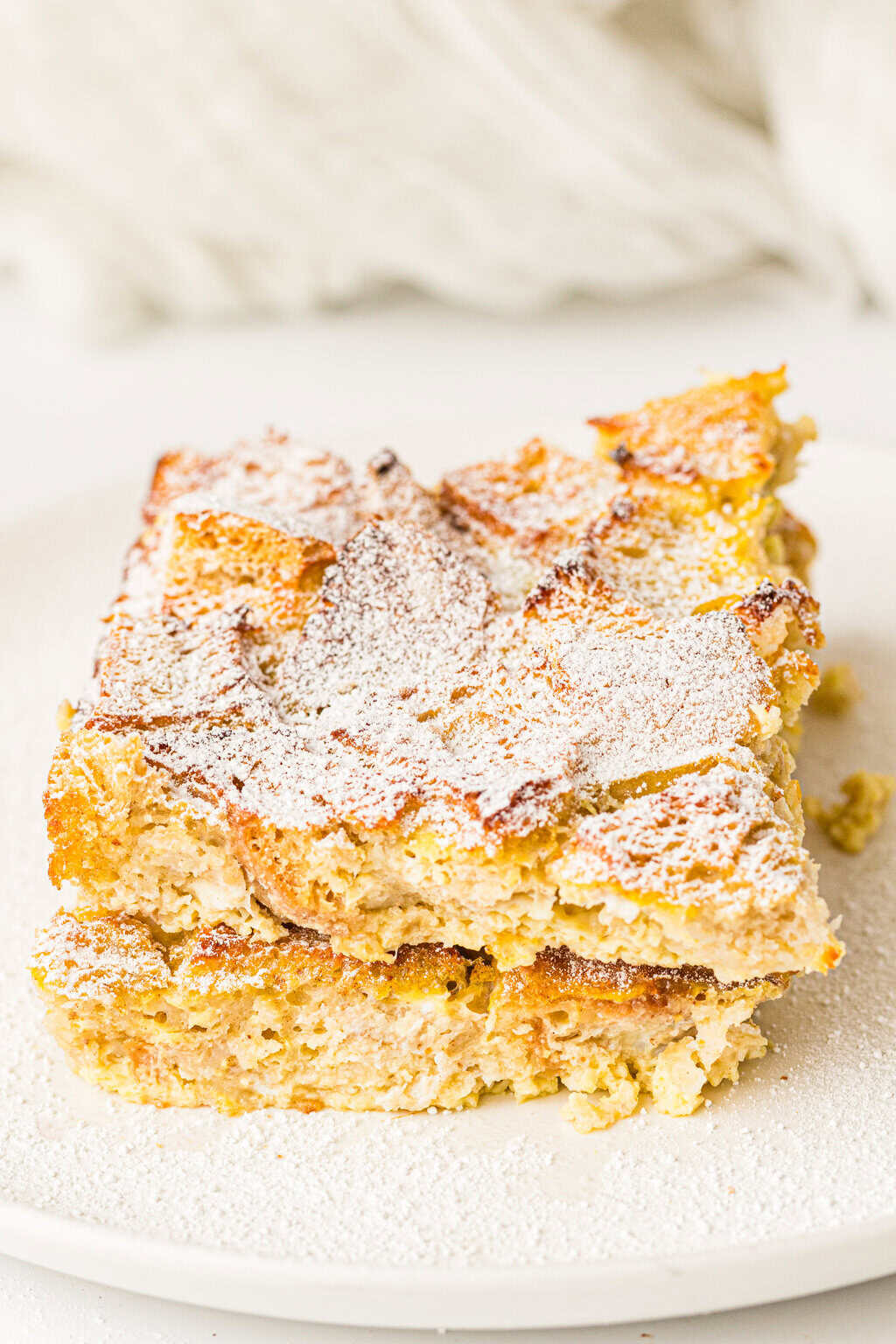
Grease your pan and get up on the sides of it, too. Greasing the walls of the pan is how you will get crisp, lacy, carmelized edges and truthfully it’s the best part of the whole dish.
How to Make It
1. Preheat the oven to 350°F.
2. Grease a baking dish with butter.
3. Place the cubed sourdough bread evenly into the baking dish.
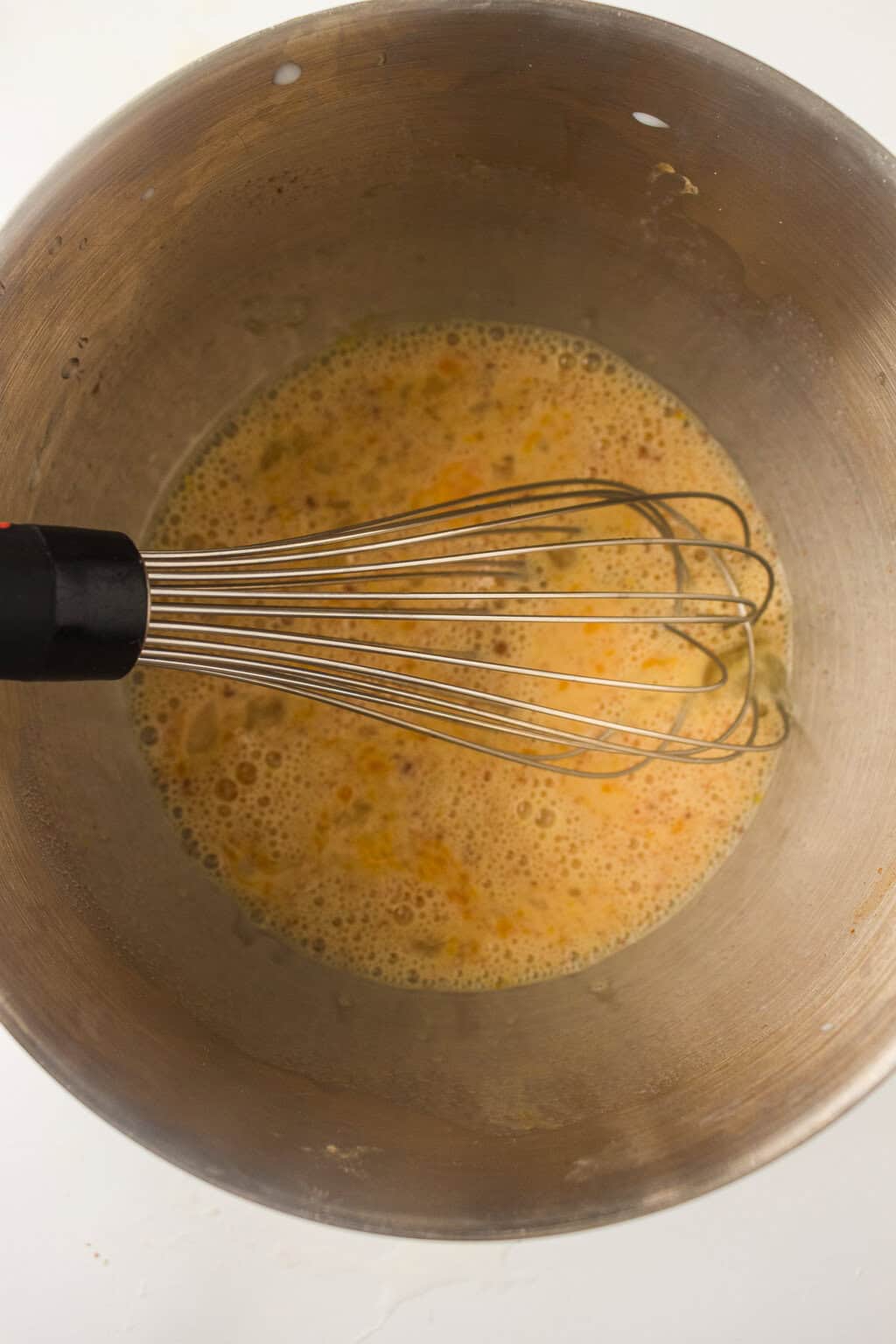
4. In a bowl, whisk together the eggs, milk, sugar, vanilla extract, cinnamon, and salt until smooth.
5. Pour the egg mixture evenly over the bread cubes.
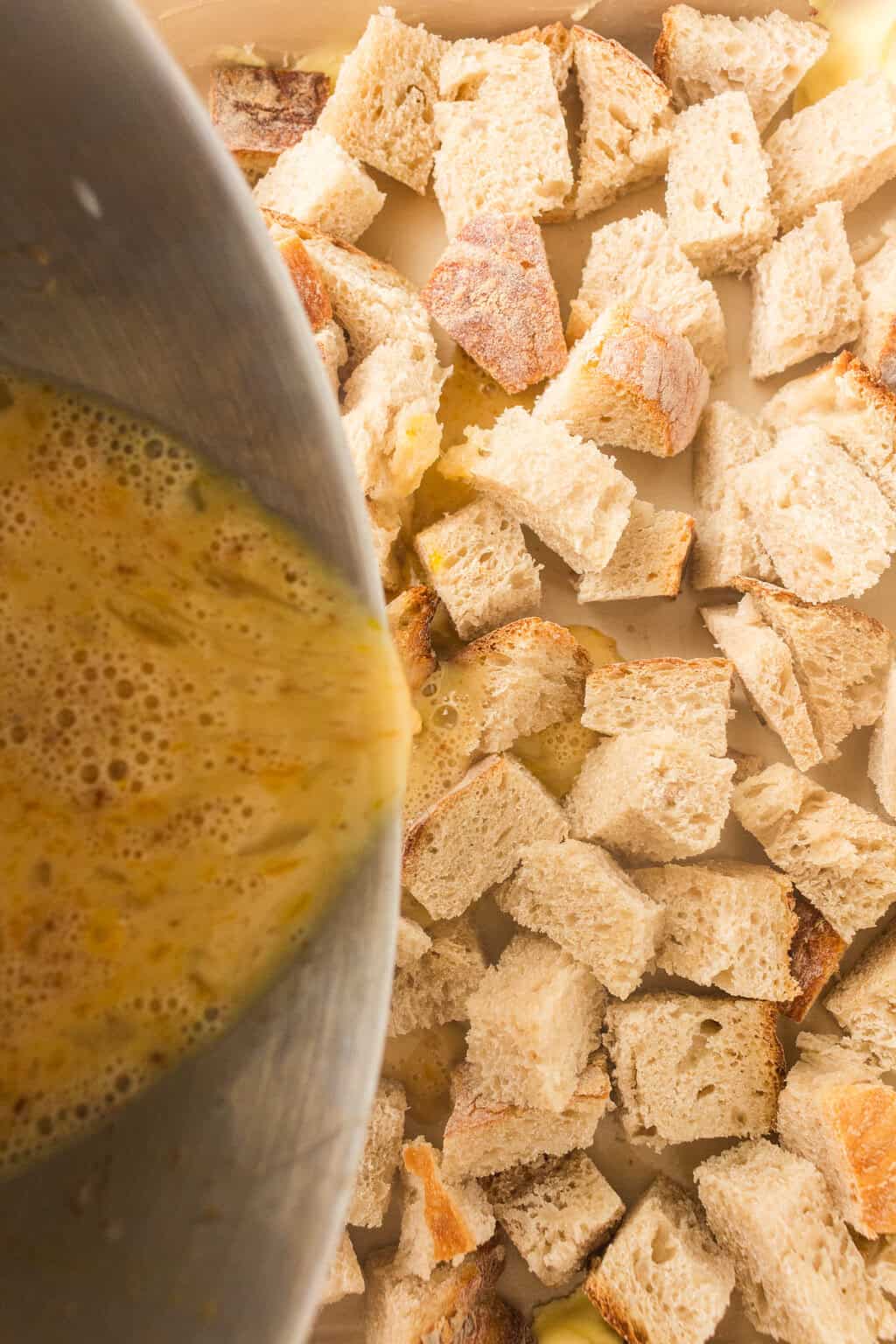
6. Press the bread gently so the cubes absorb the liquid.
7. Let the mixture sit for about 20 to 30 minutes so the bread can soak up the custard. I highly recommend this step, but you can skip it if you’re short on time. Overall, it’s going to improve your texture, but it’s not vital.
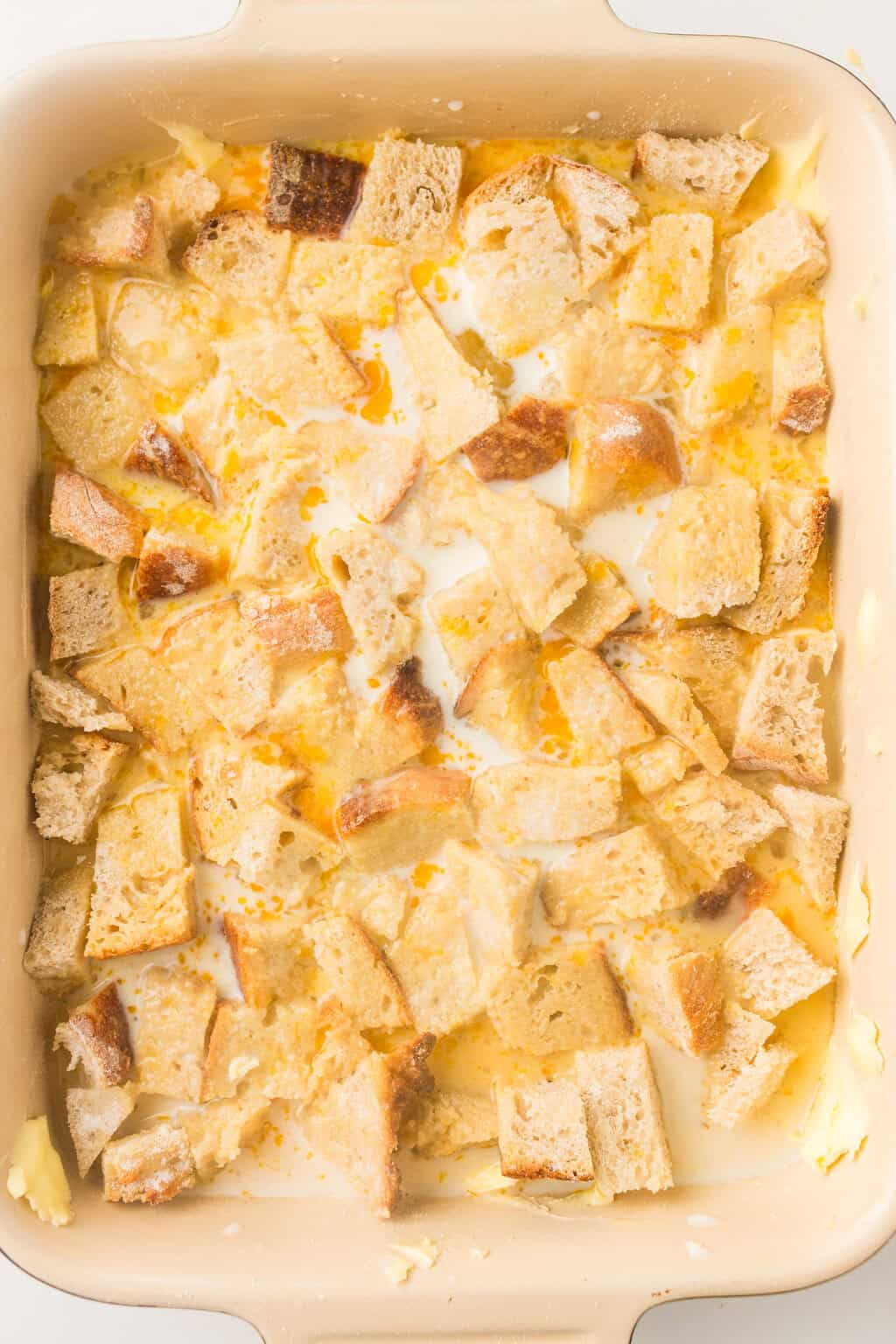
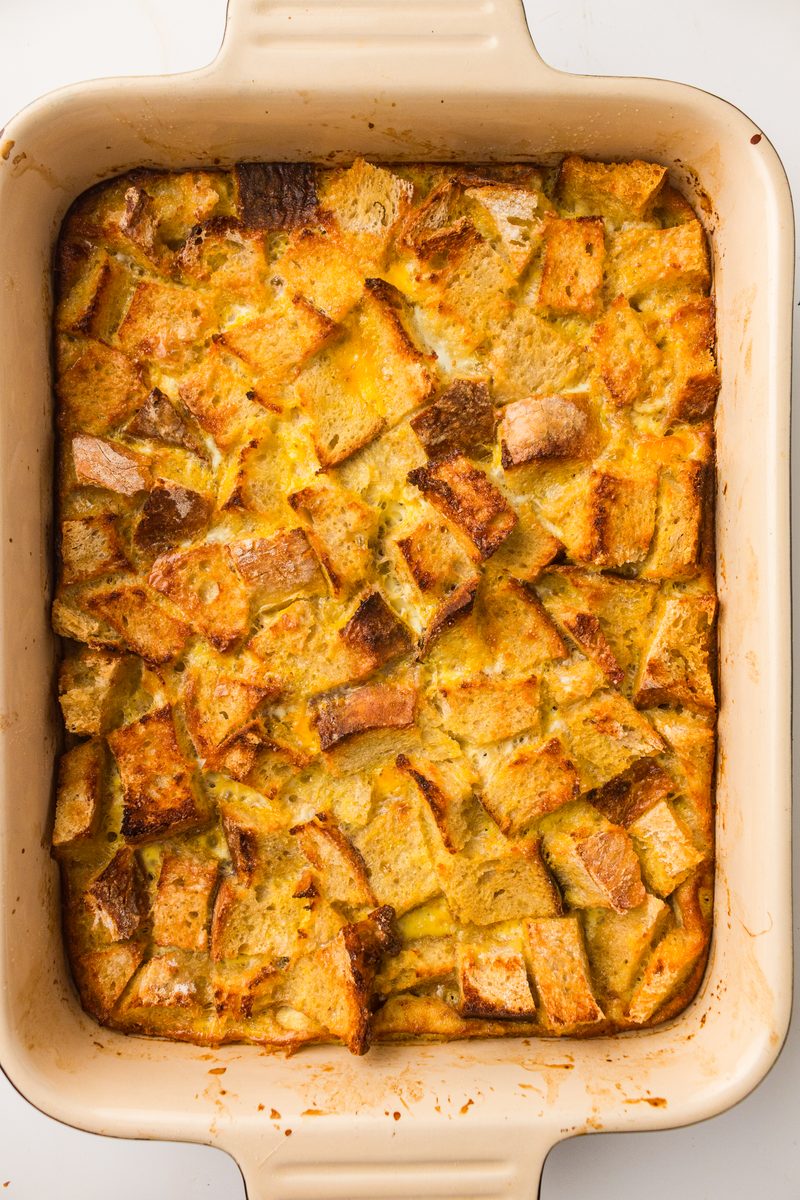
8. Bake for 30 to 35 minutes until the top is golden and the center is set.
9. Allow it to cool slightly before serving.
Prep time: 10 minutes
Rise time: 30 minutes (optional soaking time)
Bake time: 30 to 35 minutes
Total time: about 45 minutes to 1 hour
Servings: 4 to 6
Soaking Your Casserole
In step #7 above, I mentioned letting your casserole soak in the liquid. A lot of people tend to skip this because again, maybe they are short on time. But it’s worth knowing what you’re skipping and how this affects how your casserole turns out.
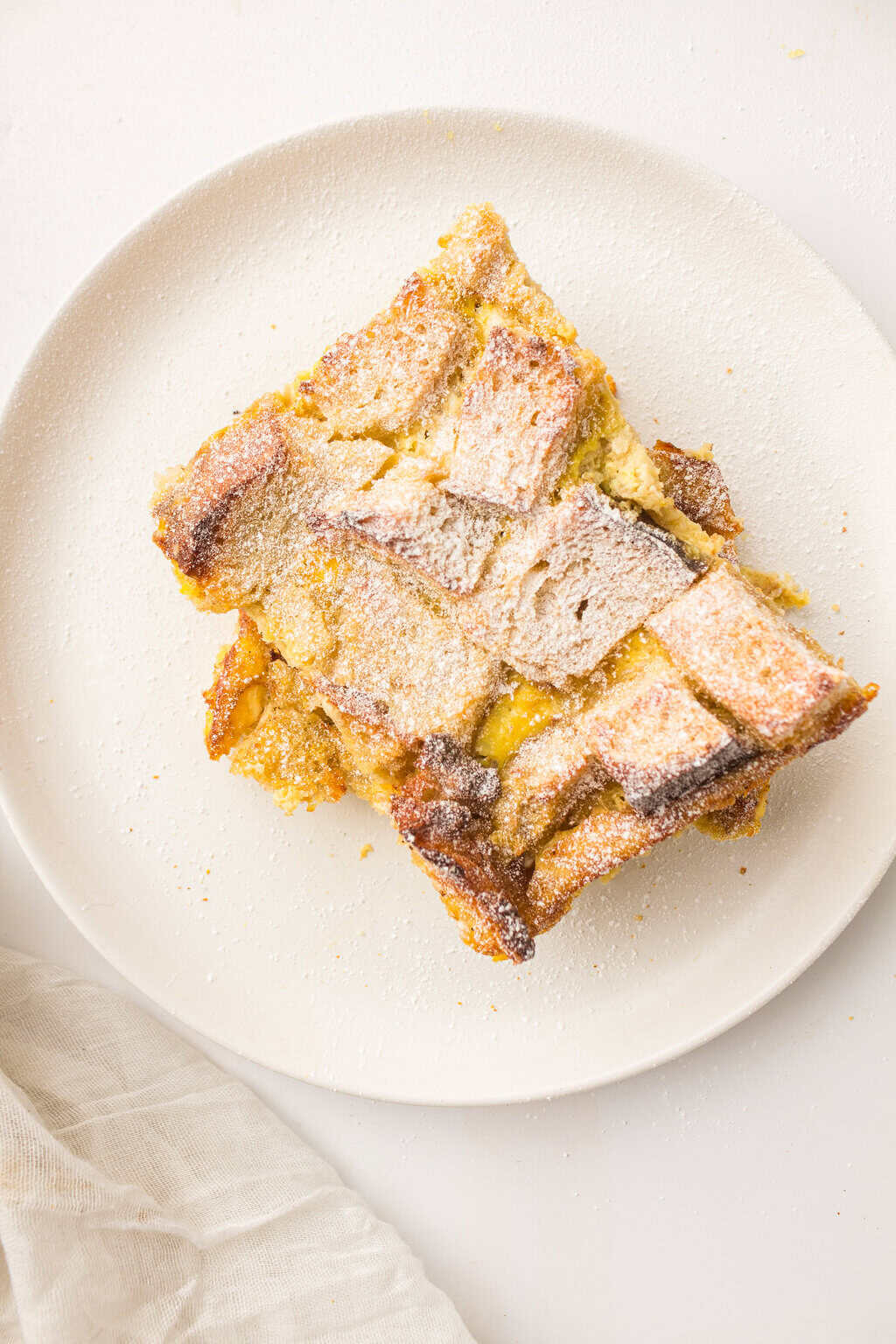
During the soaking process, the custard moves from the outside of each cube toward the center. 20 minutes is plenty of time for your bread to soak up enough liquid to turn damp. And when you’re putting a fully damp casserole into the oven, the pan will set at the same rate.
But when it is relatively dry throughout, your casserole becomes uneven. You’ll get browned dry cubes on top of a wet bottom.
When you’re creating the custard, whisky it properly. You’ll want the yolks to be fully broken up and the mixture should be uniform with no stringy ribbons of white hanging around. The ribbens will cook into little rubbery threads, and they’re just not tasty.
If you have time, try this recipe and soak it overnight in the fridge. The custard will be much richer, your bread will be softer, and your finished casserole is going to be more dense and more of a bread pudding than French toast, which is my kind of casserole.
I typically make it this way when I have company showing up because I can do everything the night before and when I get up in the morning, I can just pop it into the oven. I’m not a morning person, so this takes a lot off my plate and I can sit and enjoy my coffee instead.
If you choose to try this method, take your casserole out of your fridge so it can wam up a bit before putting it in the oven. That way it’s not cold and it’ll reduce the amount of time you need to bake it.
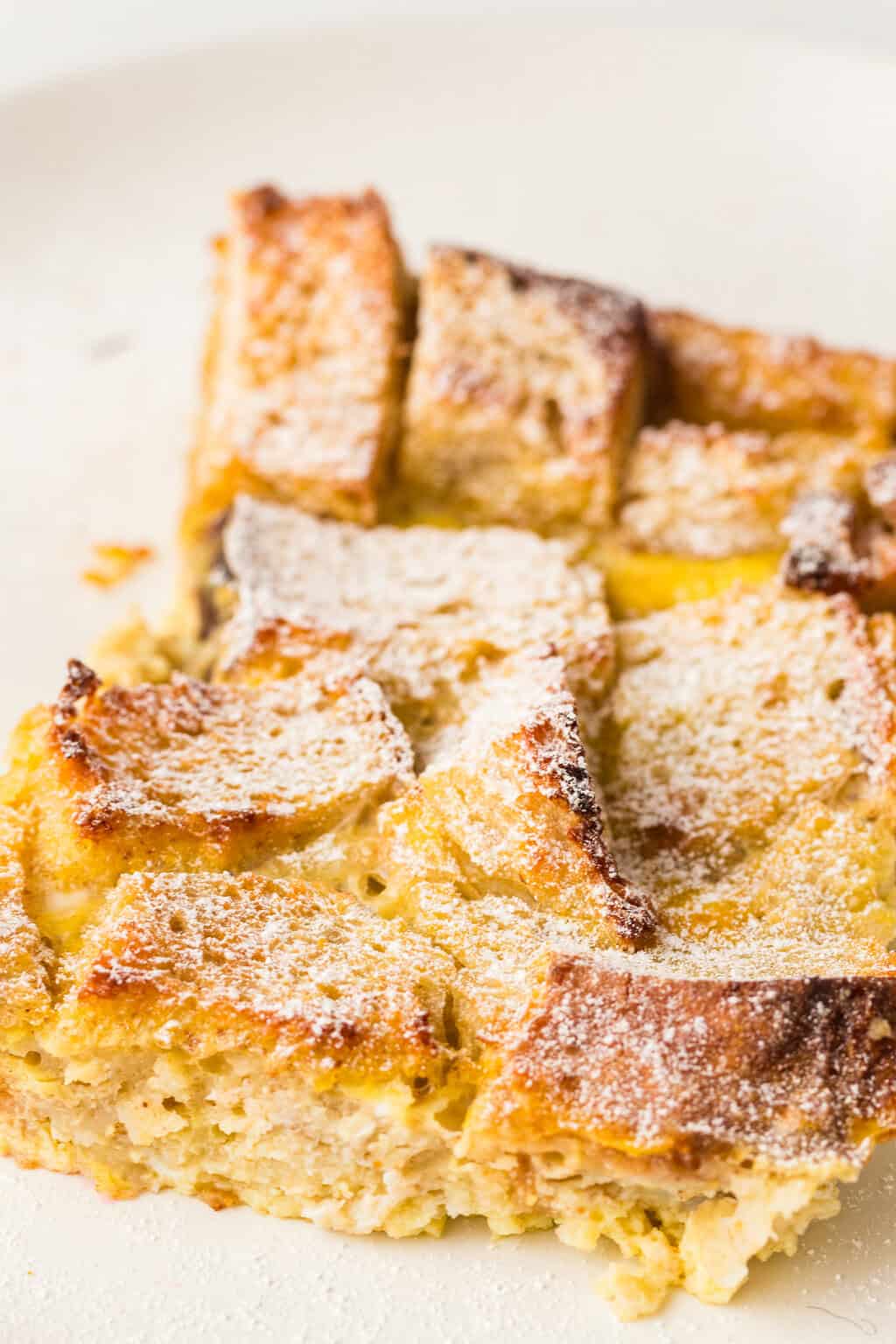
If you’re short on time, you can skip the soaking entirely. It will still work, and the easiest way to still get that delicious taste is by pressing the cubes of bread down into the pan so it forces the liquid to soak in. Of course, you’re still going to have a crispier, more toast like end product, and you’ll not get as much of that custardy goodness in the middle, but it’s still worth making.
How to Tell When It’s Done
Sure, you can try to judge it by how it looks. It’ll look golden on top and set in the middle, but that’s pretty vague.
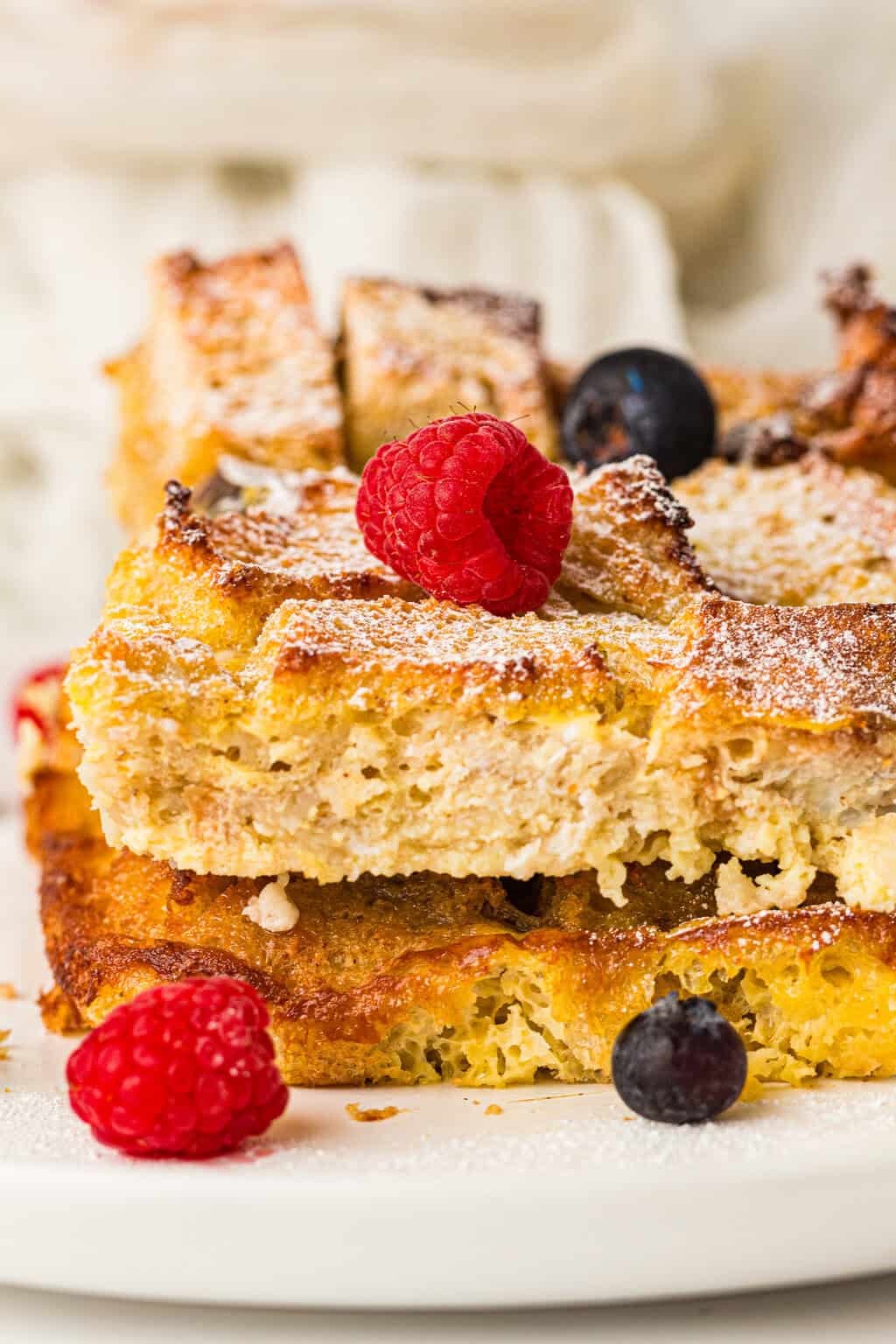
So what I do is press gently in the middle with the back of a spoon. If it feels springy and pushes back at you, then you know it’s done.
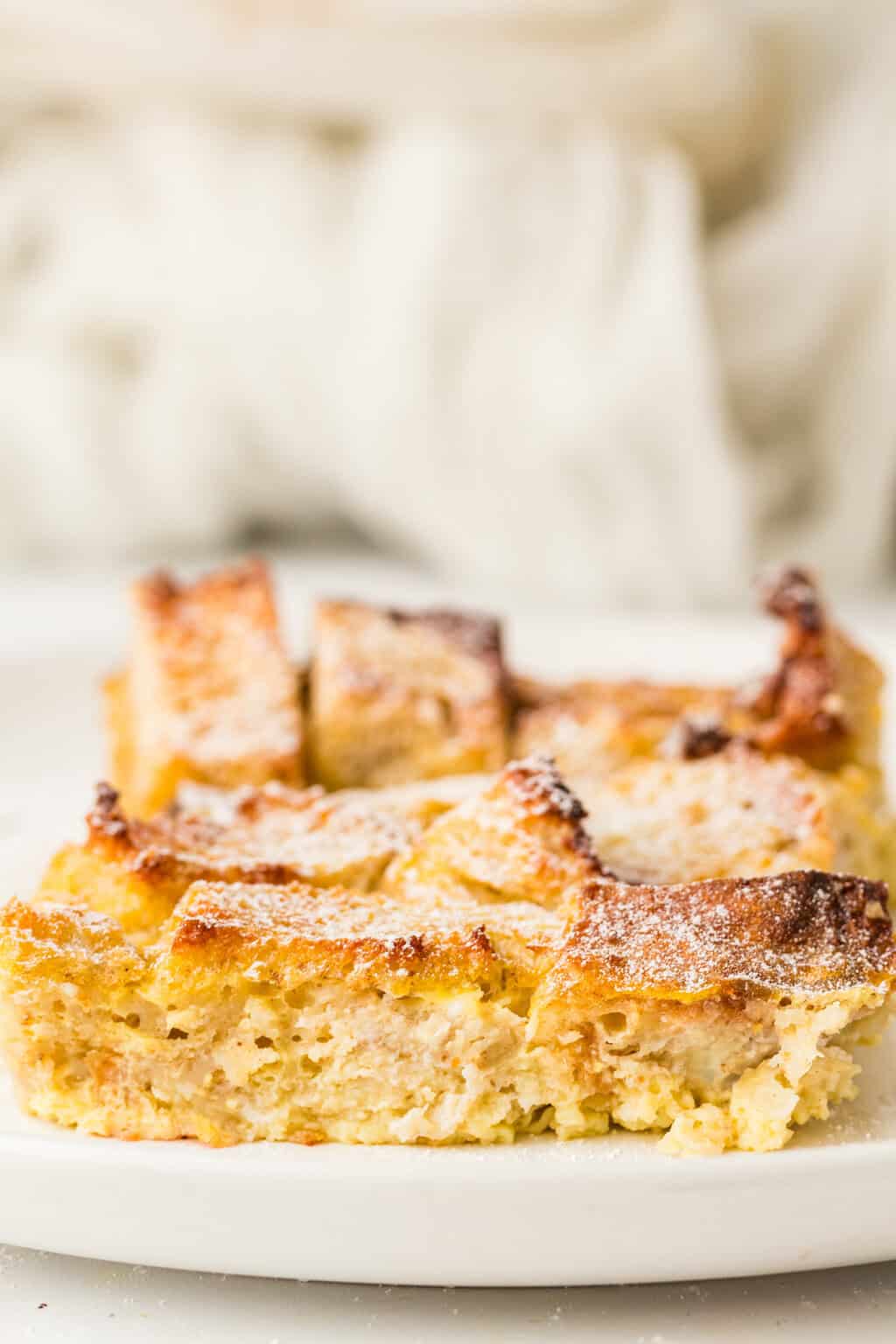
But if it feels loose and/or liquid starts to fill up around the spoon, it will need more time.
The edges should be slightly pulling away from the sides of the dish, and they should be noticeably darker in the middle.
If you want to be certain, you can also use a thermometer. The center should be 160°F.
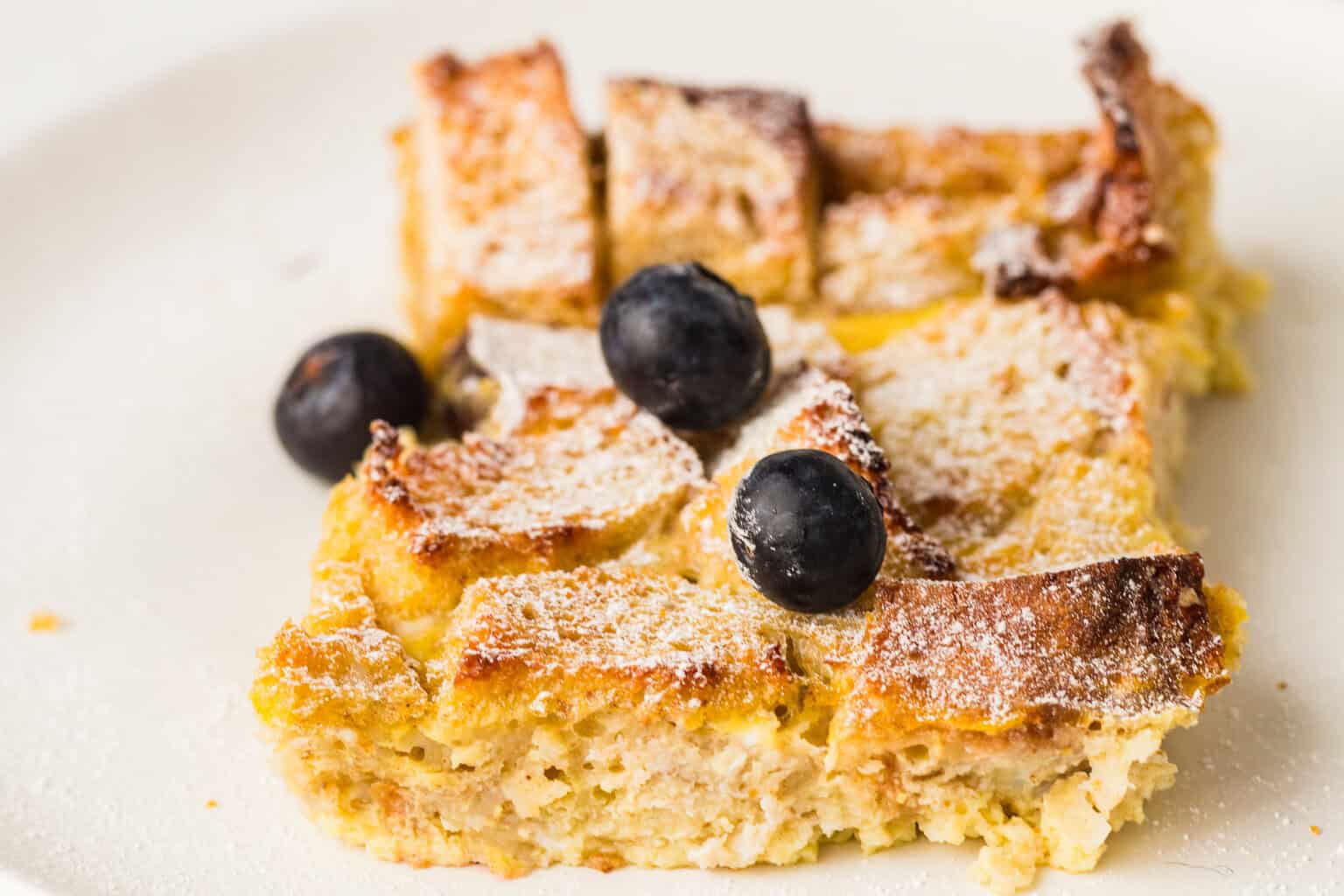
Egg will keep cooking after you pull it out of the oven, so if the casserole looks barely done, wait ten minutes and it’ll bake more. If you notice the casserole looks done in the oven and you pull it out, it might be overdone by the time you go to serve it because again, it will continue baking. So I always recommend pulling it out a little early to avoid it being overdone.
Once you pull it from the oven, let it rest for about 10 minutes. This will give the custard time to firm. It will also mean that when you cut into it, it won’t immediately slump because it’s too hot.
Pro Tips
– Use the right size dish
An 8×8 or a 9×9 pan gives you a taller, more custardy bake with a longer cook time.
A 9×13 spreads everything thinner, bakes faster, and gives you a more crispy surface area. So knowing that, choose the pan that matches the texture you want.
– Save your best cubes for the top
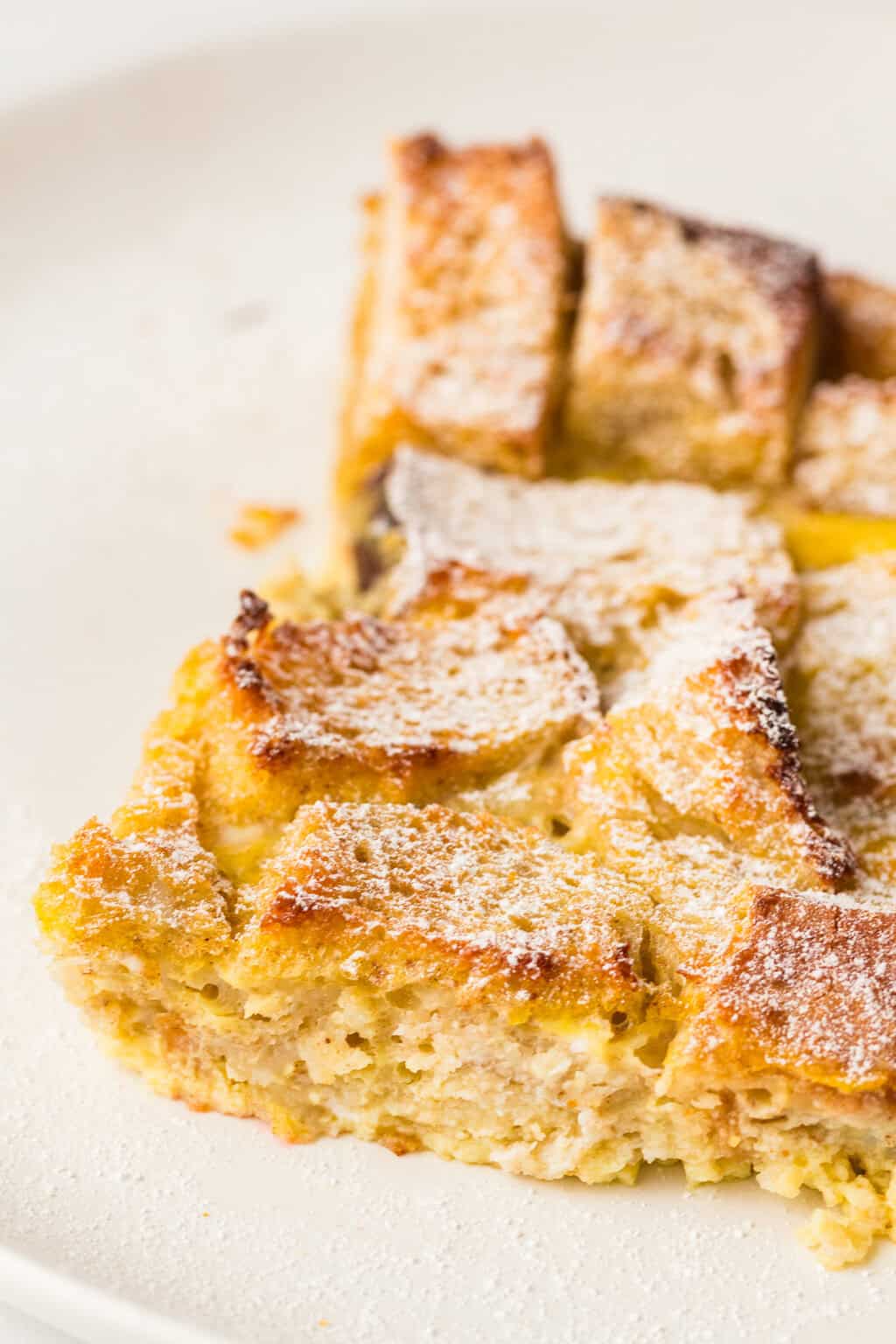
When you are filling your pan with bread, keep a handful of the best crust pieces and put them on the top of the casserole. They will toast rather than soak, so the top of your casserole will be firmer and more set.
– Tent it if it is browning too fast
Older ovens can run hot, so if the top is really golden within 20 minutes, but your center still seems loose, put a piece of tin foil loosely over the pan and keep baking it. This will help you cook the custard and not the crust.
– Want it richer?
Swap 1/4 cup of milk for cream, or add an extra egg yolk. Yolks will add more fat without making the custard tougher. This is the easiest way to make the whole casserole richer.
– Brown the butter
Instead of just smearing butter on the dish, try melting the two tablespoons in a small pan. Wait until it starts to smell nutty and the milk will turn golden. Grease the dish with some and add the rest into the custard.
This adds a toasted, almost butterscotchy taste to it, and it’s brilliant.
– Grate a little nutmeg
Take 1/8 of a teaspoon of nutmeg and freshly grate some into the cinnamon.
Variations Worth Making
Maple Syrup
Instead of using granulated sugar, try 2 tablespoons of real maple syrup (from your homestead if you have it!) and add it to your custard. Add more syrup on top after it’s done baking.
If you have access to a local dark amber syrup, use that. I like to make this version in late March when everyone at our house is maple-obsessed. Our neighbors have the best maple syrup and we can’t get enough of it.
Apple Cinnamon
It’s never a bad idea to add apple to recipes. Add in one thinly sliced tart apple with a pinch of cinnamon and put it amongst the bread cubes before you add the custard. I recommend the more firm varieties because they’ll hold their shape the best. So I’m talking Cortland, Empire, or Honeycrisp.
Berry Swirl
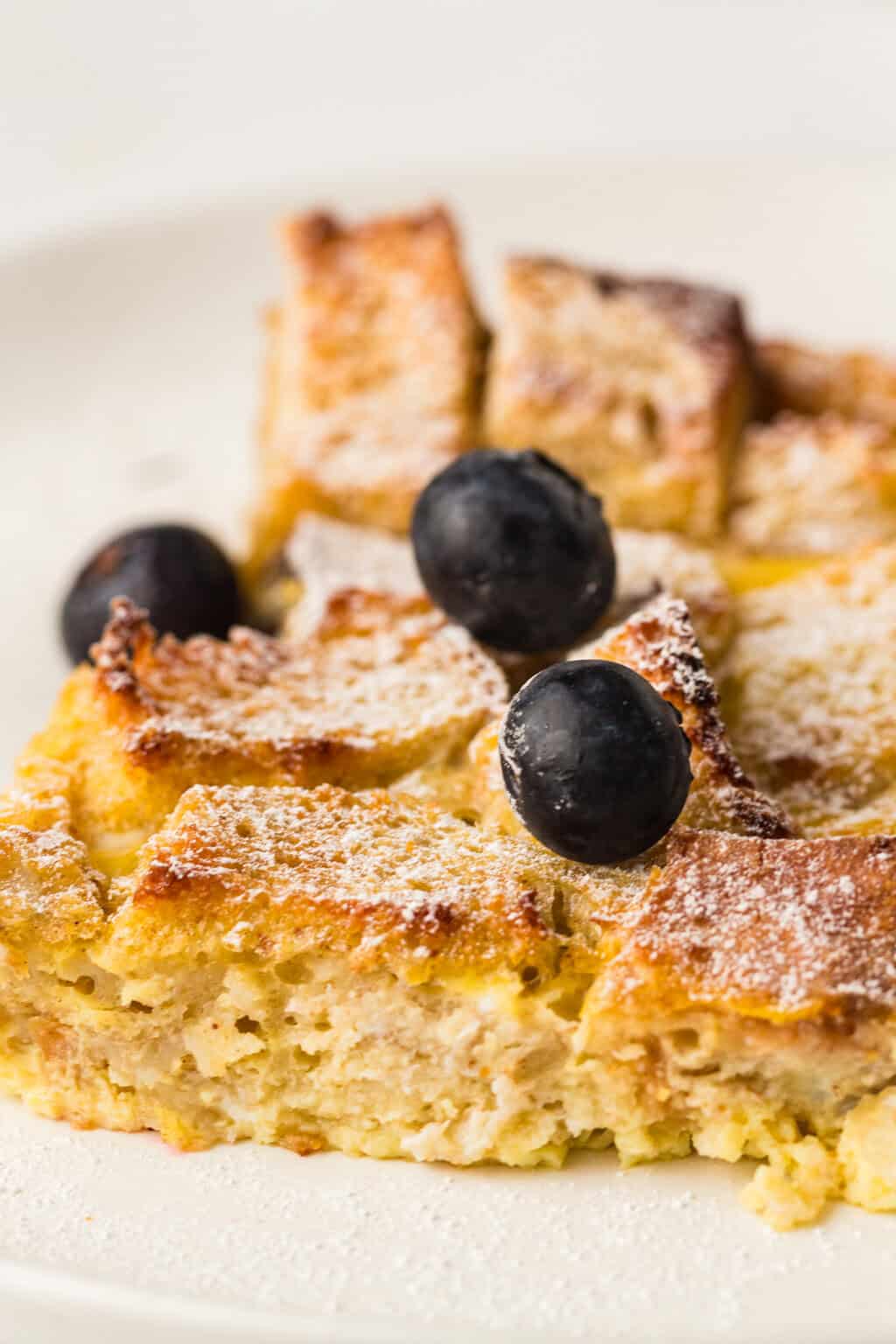
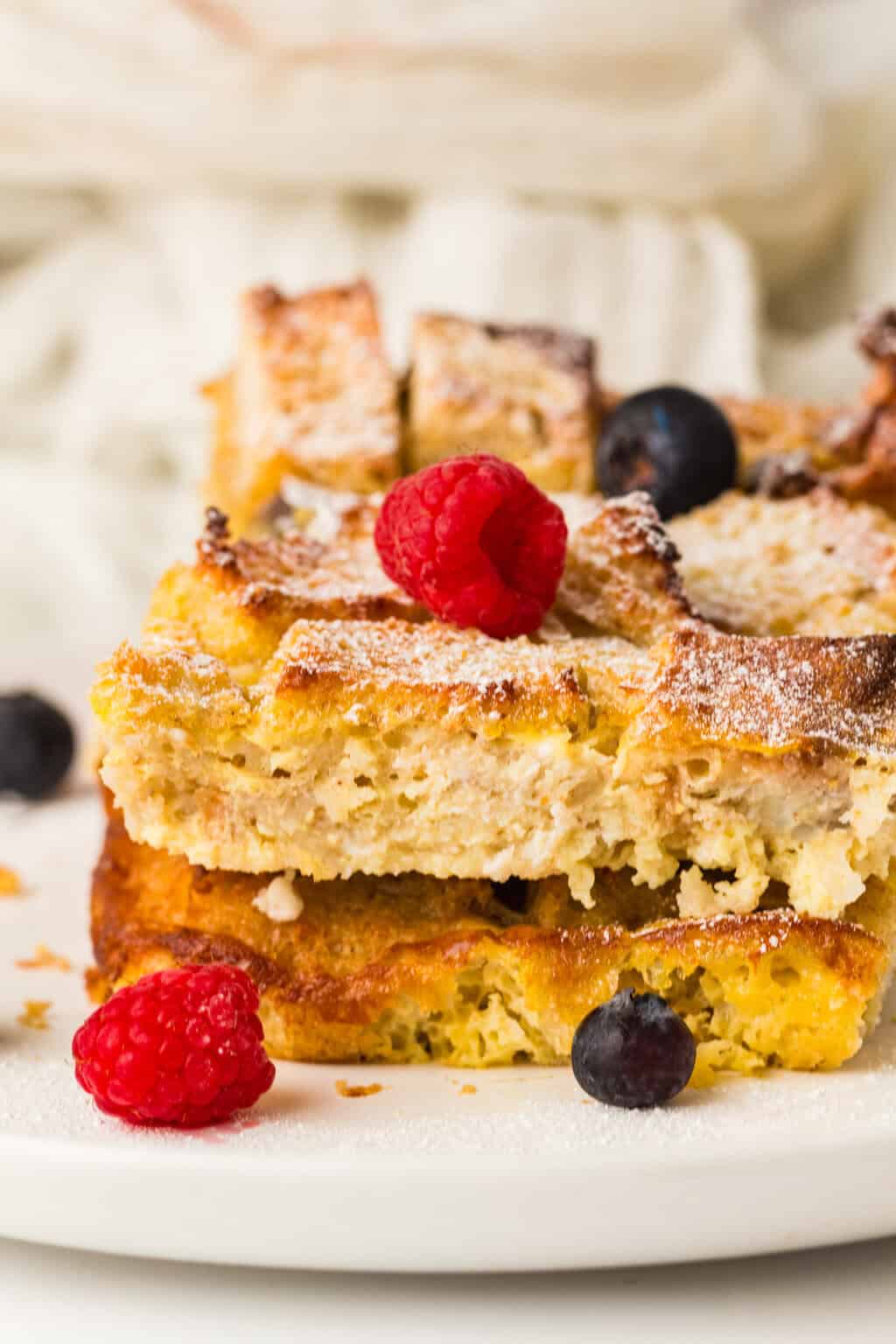
This is our go-to because it takes very little extra effort. Add a cup of blueberries and/or raspberries over the bread before pouring. Frozen berries can go in frozen, so they don’t bleed through the whole pan.
Cream Cheese Pockets
I’ve only tried this once, but it was a huge hit. Take 4 ounces of cold cream cheese and put them in small cubes throughout the bread before you pour the custard. They melt into little pockets and taste like cheesecake.
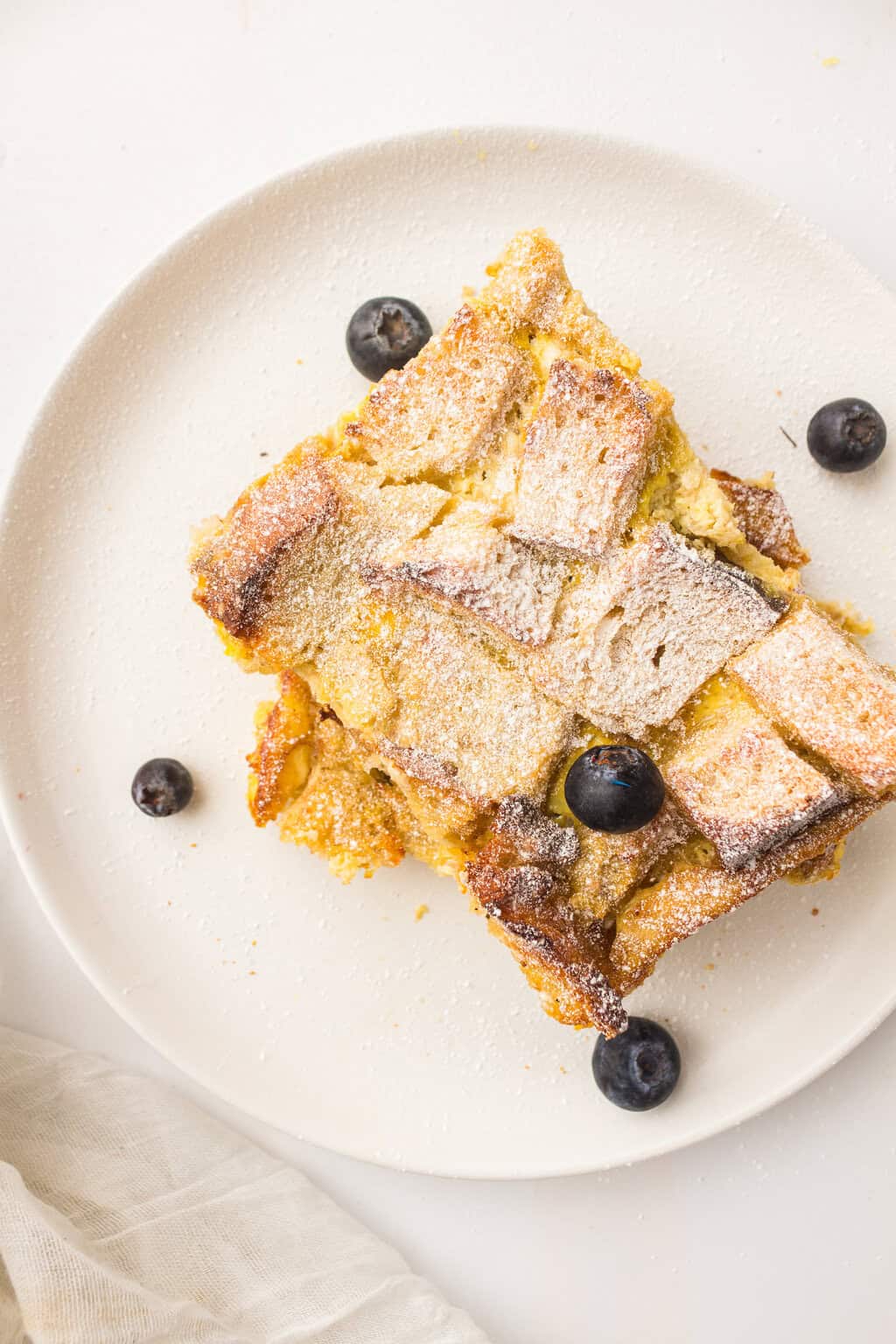
Savory
Instead of the sugar, vanilla, and cinnamon, add a cup of shreeded cheddar, some chopped chives, and black pepper. Even better, add a fried egg on top.
Pumpkin Spice
This is one variation I haven’t tried yet, but it’s on my list, especially since it’s fall.
Whisk 1/3 of a cup of pumpkin puree into the custard along with a teaspoon of pumpkin pie spice. If you choose this variation, add 5 minutes to your baking time.
Streusel Top
I’m a sucker for streusel. Anything streusel is a big YES for me.
Rub together 1/4 cup of flour and brown sugar with 2 tablespoons of cold butter. It’ll turn crumbly, and when it does, scatter that over the top of the casserole for the last 15 minutes.
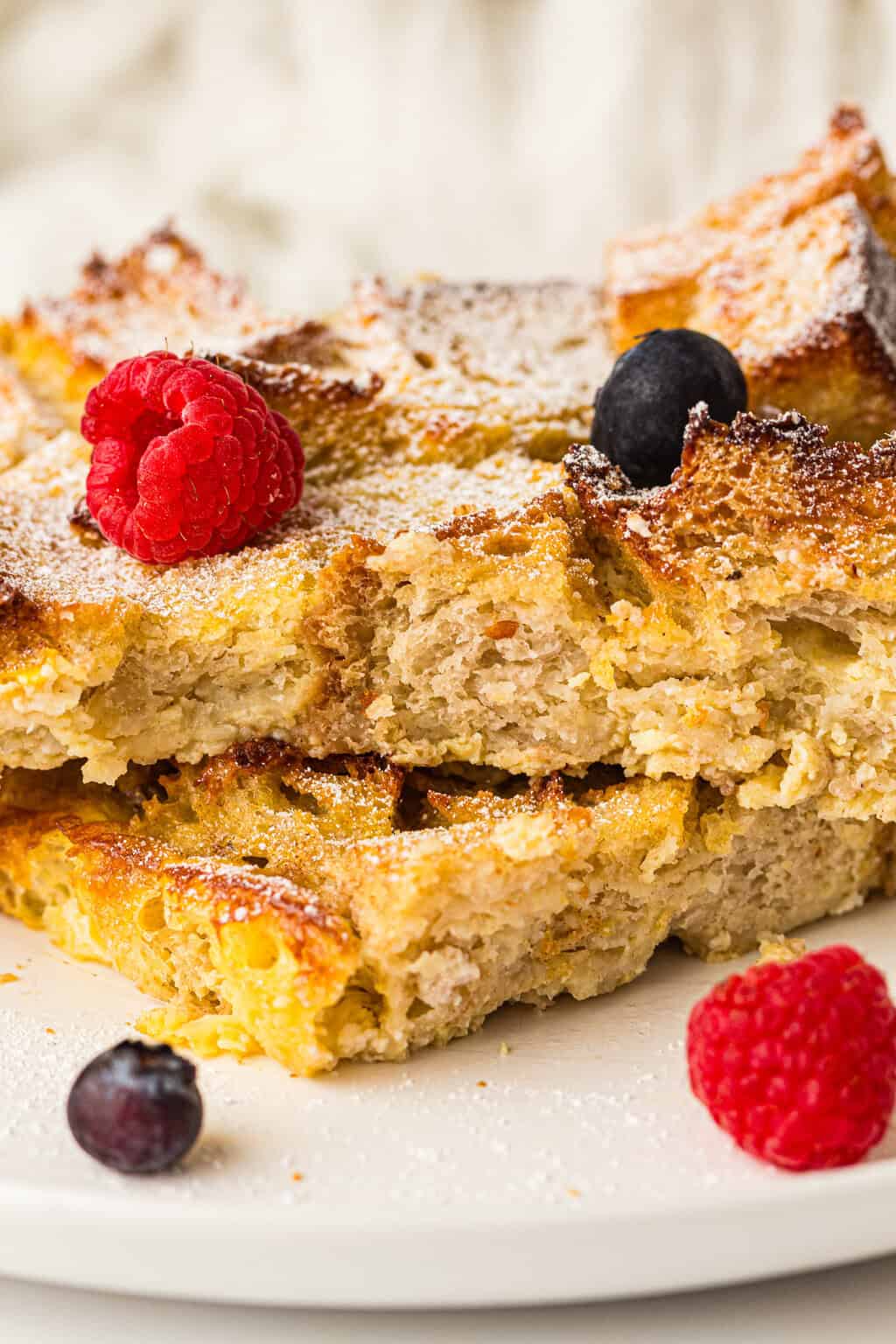
Serving Suggestions
- Drizzle with maple syrup
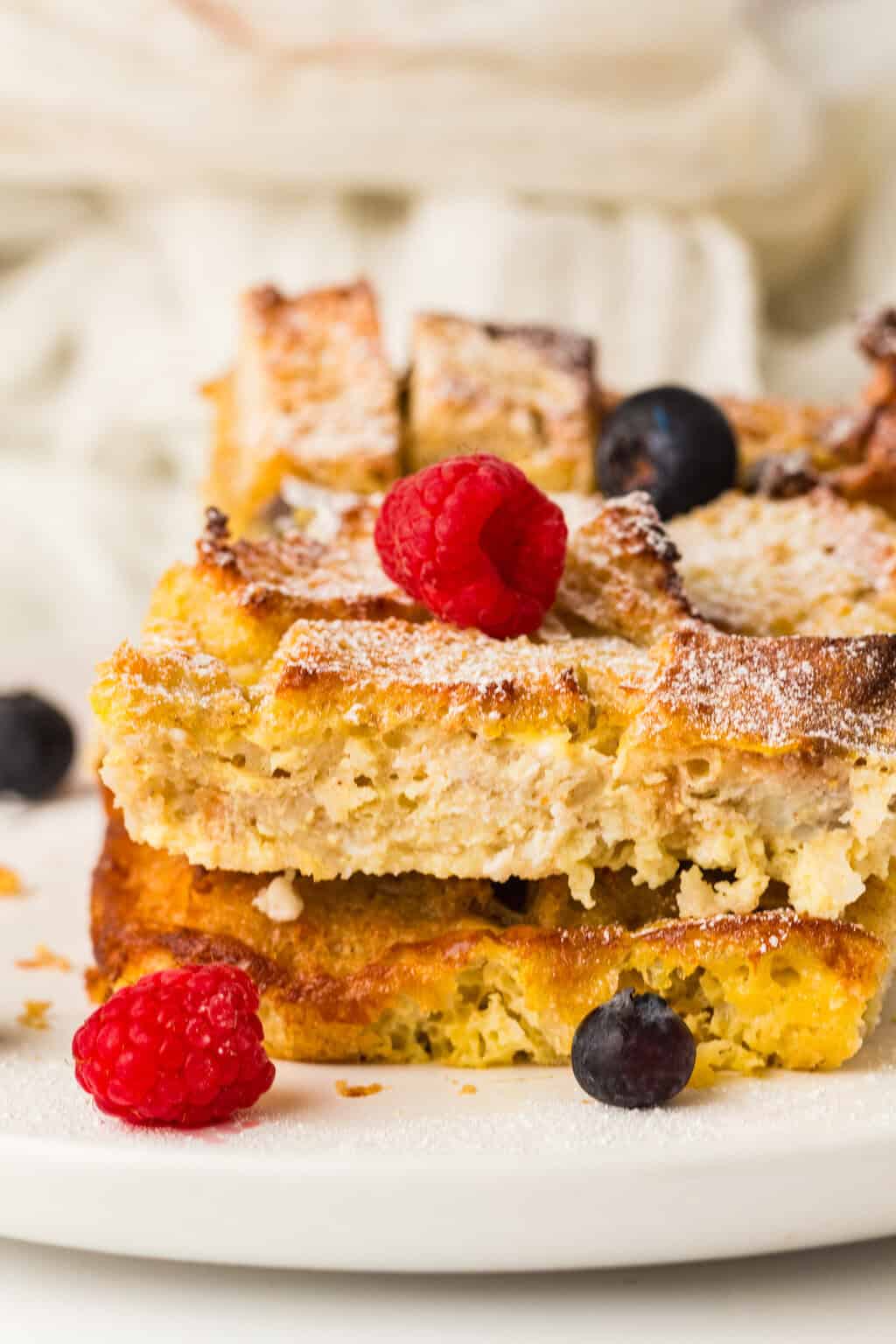
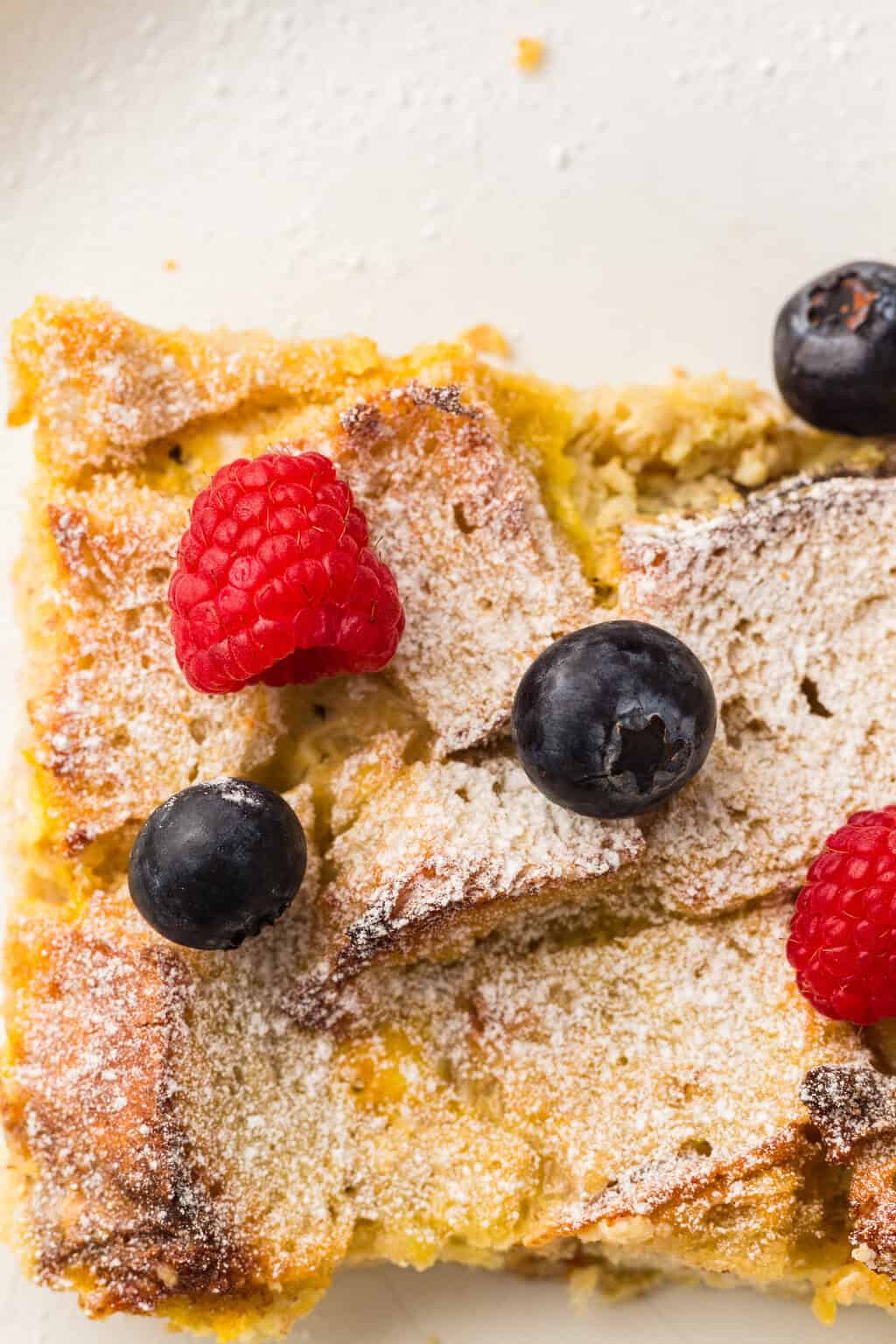
- Dust with powdered sugar before serving
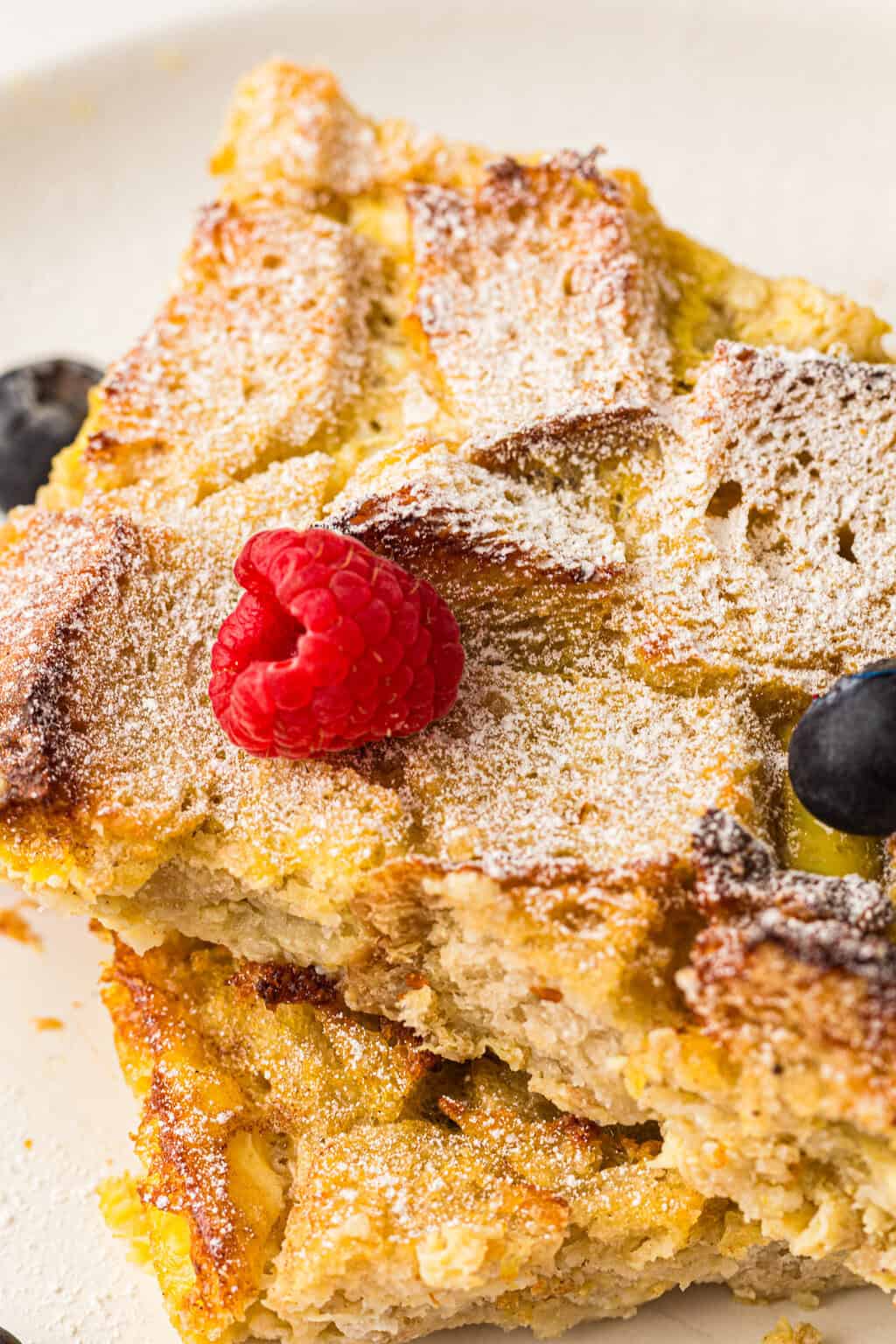
- Top with fresh berries
- Serve with yogurt for extra protein
This will depend on how many people you’re feeding at once. If you are feeding your immediate family, try a spoonful of plain yogurt on the side. It adds protein and the tang will mix perfectly with the warm custard.
If you have a group of people, stick with syrup, berries, and powdered sugar for simplicity.
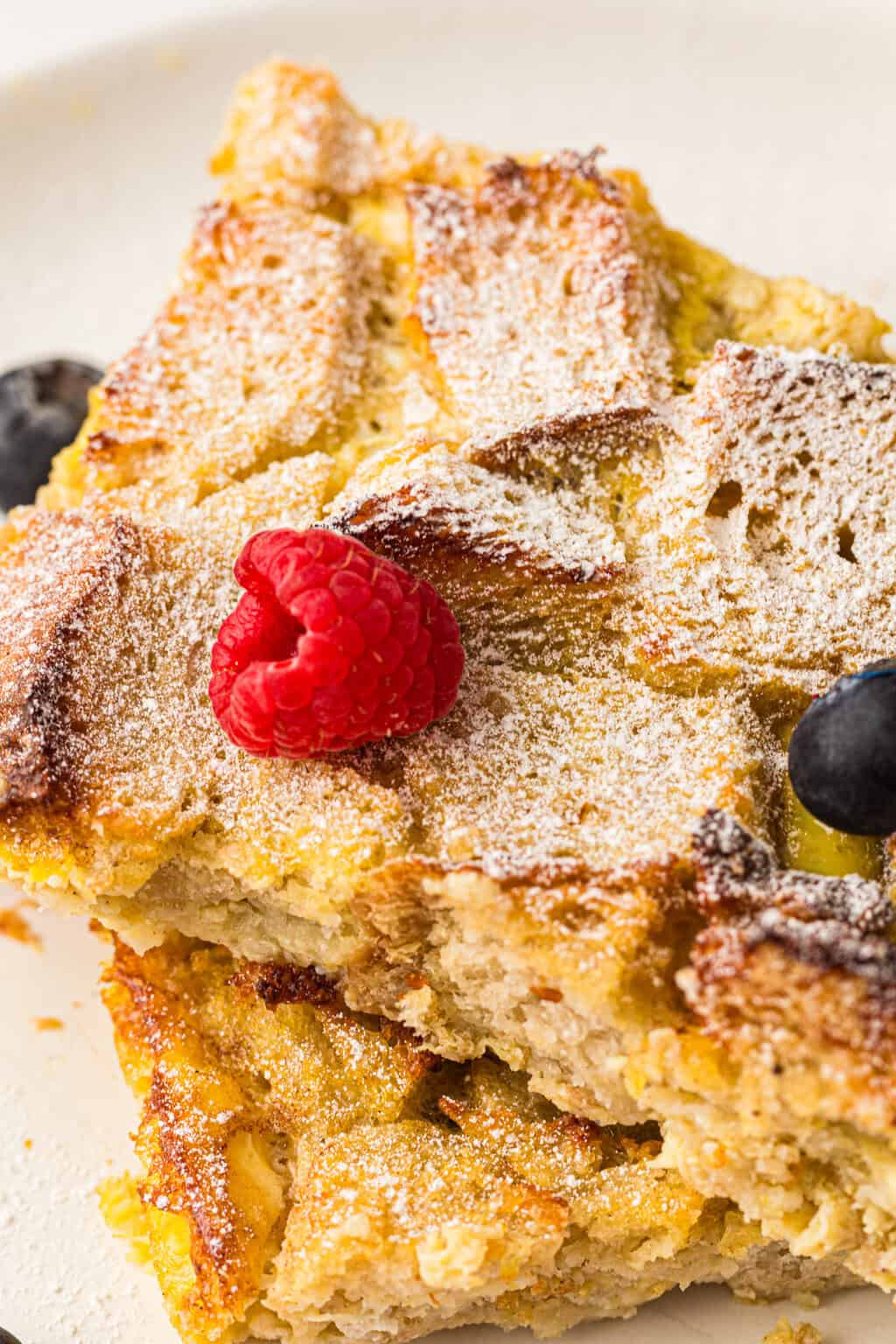
Storage and Make-Ahead
If you have leftovers, put it in an airtight container in the fridge for up to 3 days.
To warm, reheat it in the oven at 325°F for about 10 minutes. Yes, you can also pop this into the microwave, but it tends to steam the crust, which makes it soft instead of crispy.
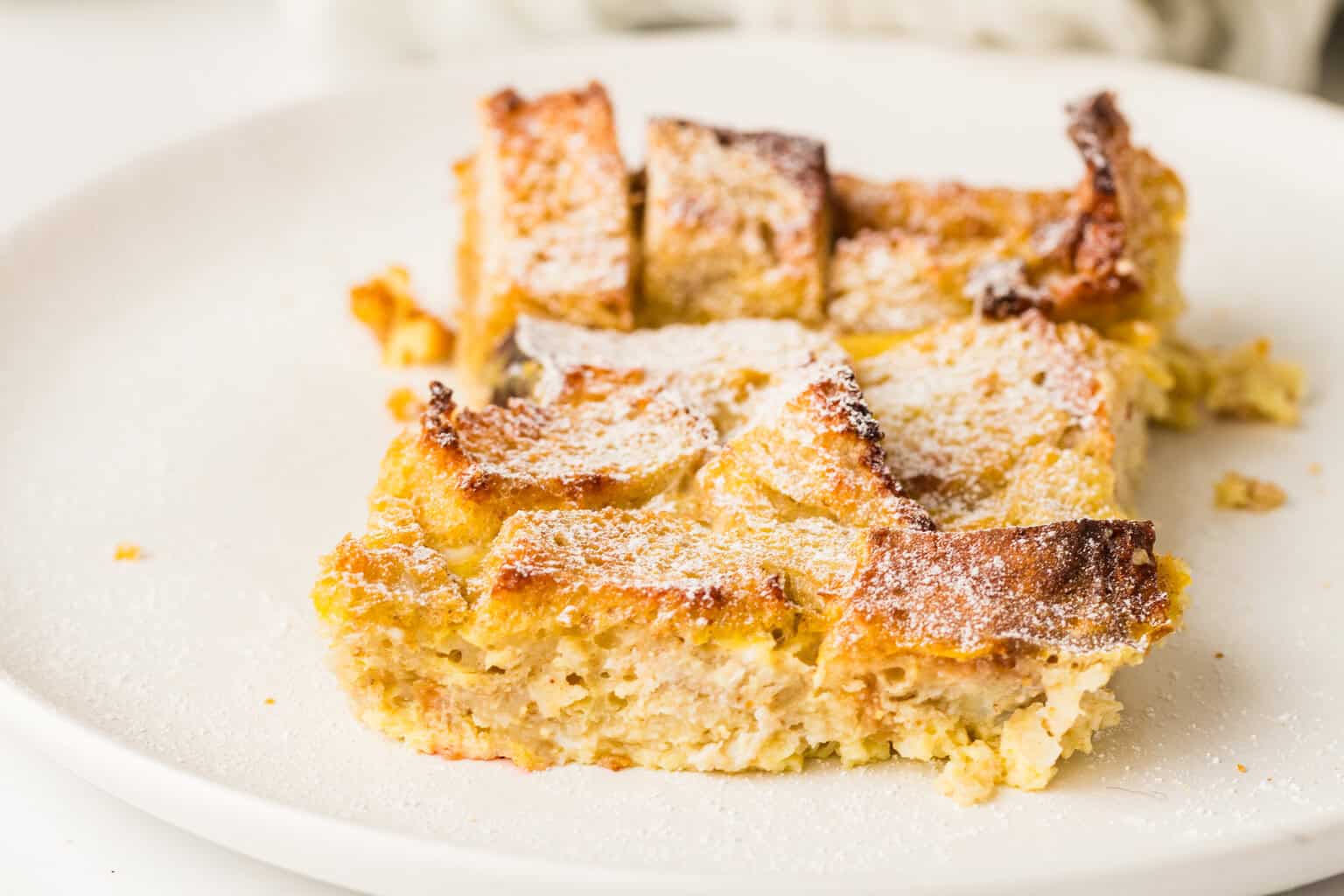
If you want, individual portions can be frozen up to 2 months and reheated in the oven, too. Let the pan cool completely, cut it into squares, wrap each one, and freeze them on a tray before bagging them. Reheat them from frozen at 325°F for about 20 minutes; cover with foil for the first 15 minutes so the outside doesn’t dry out before the middle thaws.
If you’re making this ahead of time, create the whole dish, cover it tightly and refrigerate overnight. It will hold up well in the fridge for up to 24 hours. Anything more than 24 hours and the bread starst to breakd own and the texture gets pasty.
Troubleshooting
Soggy in the middle
If your casserole is soggy in the middle, it means it’s almost always underbaked, not oversoaked.
Put it back in for another 5-8 minutes and check the center with the spoon. Another common cause is that the bread is too fresh so the custard pooled at the bottom instead of being absorbed.
Dry and bready
If your casserole turns out dry and bready, then not enough custard was used for the volume of bread you added.
Either use a bit less bread next time or add more custard filling by adding another egg and a 1/4 cup of milk.
Rubbery or scrambled texture
If yours tastes rubbery or scrambled, your oven ran too hot. Egg custard wants steady heat, so check your oven thermometer.
Top burned, middle raw
If you notice this start to happen, tent your dish with tinfoil and keep going. This is a heat distribution problem.
FAQs
Can I use stale bread for this recipe?
Yes, you should actually use slightly stale bread for this. It absorbs the custard without becoming mushy.
Can I prepare this the night before?
Yes. As a busy mom, this is what I do every time. The overnight soak makes the dish so much better anyway.
Can I add fruit to the bake?
Yes, I recommend blueberries, raspberries, strawberries, or even a sliced apple.
Why is my bake soggy in the middle?
The bread may not have soaked long enough or the dish may need a few extra minutes in the oven to fully set.
Can I use sourdough discard instead of a loaf?
No, unfortunately you cannot. Discard is a batter, not bread. So there’s nothing for the custard to soak into. Use your discard for pancakes or crackers instead.
Can I make it dairy free?
Yes. Try full-fat oat milk or canned coconut milk. They set well because they have enough fat. Grease the dish with coconut oil or dairy free butter.
If you’re thinking of using thin nut milks, you’ll get a looser custard, so add an extra egg in there.
How do I double it?
To double this recipe, double the ingredients and add it to a 9×13 pan. Add about 10-15 minutes to the bake and check the center before you putt it. Since it’s a deeper pan, it takes longer to set.
A Final Note
This is one of the easiest sourdough recipes and everyone loves it. My kids love it, my husband loves it, and all the family and friends that come to our house beg me to make it. There are very few ingredients involved, it takes very little time, and I can prepare it the night before.
I hope you enjoy this recipe as much as I do!

Erie is the owner and author of Everywhere Ontario. She’s lived and traveled around Ontario for over 30 years, visiting small towns and big cities from the shores of Lake Erie to the crisp northern air of Hearst along the Trans-Canada Highway. She is passionate about maximizing fun and supporting local tourist businesses and is always looking to provide the best recommendations to her fellow Ontario travelers. Read more about Erie here.