
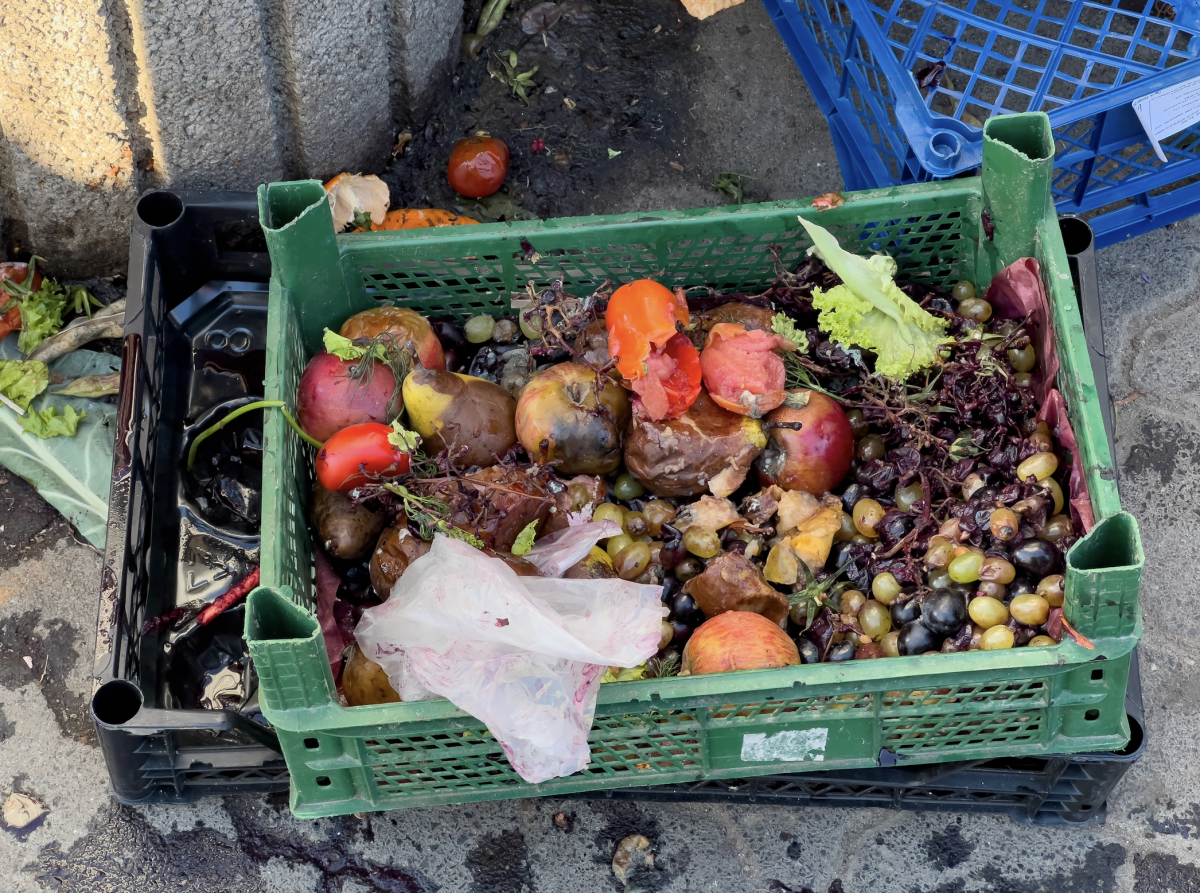
If you’ve spent any time in gardening groups or watched a few backyard composting videos, you’ve probably run into a dozen different “never compost this” rules. And half the time, nobody bothers explaining why these rules exist.
And from what I’ve found, some of these “rules” aren’t really rules you need to care much about. Like for example, eggshells and coffee grounds get a bad rap for no good reason.
So here are 19 things experienced composters recommend skipping, plus a reason why you should avoid each one.
#19: ALUMINUM FOIL AND WRAPPERS
Overally, foil and foil wrappers don’t break down fast enough for it to make sense adding it to your compost.
They’re not toxic, so it’s not the worst thing you could do, but they will ultimately just sit there forever. A year from now, you’ll be turning your pile and find the foil you put in there last year and it’ll look the exact same.

OUR TIP: We recycle our foil rather than putting it into the compost bin. Most recycling programs take it if it’s clean, so clean it off first, and they should be able to dispose of it for you. It’s a small habit and a bit of a tedious task, but recycling instead of composting will keep your finished compost fresh and able to break down.
#18: BREAD TAGS, TWIST TIES, AND TAPE
Bread tags and twist ties are REALLY easy to miss. Ask me how I know haha. I’ll toss a bag of spinach scraps in the bucket and I won’t notice the twist tie until months later and find it in our finished compost. The rest of the soil will look fabulous and super rich, but there’s that dang bread tag or twist tie, just not decomposing at all.

They are small and annoying, but it’s worth checking before you toss anything in, especially if you’re composting packaged produce or bread ends.
#17: PRODUCE STICKERS
Those little oval stickers on apples and avocados are pretty much plastic and you’ll learn quickly that they do not decompose ever.
Even when I’m careful, I still routinely find stickers that I accidentally tossed in years ago. And of course, they are perfectly in tact and readable because that’s what plastic does.

I’ve been starting a routine where anytime we buy produce from the grocery store, I’m not allowed to put anything away until I take the stickers off. It takes like 2-5 minutes each time, but it saves me a lot of time later. I can’t tell you how many tiny oval stickers I’ve found in my garden beds and I’m over it!
#16: “COMPOSTABLE” PLASTIC BAGS
These “compostable” plastic bags were created to trick you becuase the truth is a lot of them are only designed to break down in industrial composting facilities, not your backyard bin. Womp, womp! They require higher temperatures to break down and your backyard ain’t supplying that.
Instead, they will just sit in your yard like a regular plastic bag and you’ll wonder why you bought them in the first place because you’ll be picking them out months later still completely in tact. So don’t be fooled (I was), don’t put these bags in your composting bin.

You can still use these bags because they are likely better than regular plastic bags, but I wouldn’t put the bag in your garden. I would use the bag for scraps, remove the scraps when ready, and toss the bag in the dedicated recycling bin for it to breakdown in another facility.
#15: GLOSSY OR COATED PAPER
Paper is fine in the compost, but only specific kinds of paper. If you’re throwing in magazine pages, flyers that are glossy, or anything with a slick, plasticky feel, don’t compost it.
That coating is supposed to block water and air, which means your composting schedule will be much, much slower. Not to mention, the ink and finishes on those pieces could have a lot of chemicals in them that you just don’t want breaking down in your soil.

Focus on cardboard, newspaper, and regular printer paper for composting. It’s really anything that’s shiny that causes problems.
#14: COOKING OIL
Oil causes a lot of problems in so many areas – drains, compost, you get the picture. It’s not a friendly substance for many situations. For composting specifically, oil coats everything around it, including kitchen scraps, wood chips, leaves, etc. The coating blocks water from soaking in, and water is what decomposition needs to work.

A small bit of oil won’t ruin your pile, but pouring in leftover fryer oil regularly will cause your pile to decompose slower and become slimier.
#13: SYNTHETIC CLOTHING AND FABRIC SCRAPS
Cotton, wool, and linen will break down over time, so you should consider compositng it. But polyester is another story. For those who don’t know (I was one of these people once upon a time), polyester is pretty much plastic and it’ll act like plastic in your pile.

Clothing in general is a bit tricky because a lot of clothing has tags or buttons that won’t decompose. So even though I mentioned a few fabrics that do just fine in your pile, be picky and selective about the clothing you add. Stick to natural fibers and check the tags before you toss it in.
A general rule of thumb that I recently told my husband was: old cotton t-shirts and worn out wool socks are fine, but the fleece jacket you were considering throwing in is not.
#12: WHOLE EGGS
When I first started composting, this one surprised me. Crushed, dried eggshells are great for compost, and they are typically one of the best things you can add. But let’s say you are going to toss out the full egg.. I would think again.

If you live in an area prone to critters or creatures like raccoons, rats, bears, etc. cracked eggs stink and they will attract these scavengers.
OUR TIP: We live in an area that has a LOT of bears, and we’ve found that crushing the shells and skipping the yolk/white works. We also bury them deep in the center of an active pile, if we decide to include them at all.
#11: FISH SCRAPS
Fish scraps are another one to be cautious of. Although fish scraps are packed with nitrogen and break down quickly, they also smell bad, just like whole eggs.

If you want to use fish waste in the garden, bury it really, really deep. This will be helpful in repelling wild critters, but also your own if you have a dog or cat that likes to dig!
#10: DAIRY PRODUCTS
Here’s another category that attracts the animals. Dairy products! Milk, cheese, yogurt, anything dairy will stink.

If you’re adding small amounts and you mix them deep enough into a big, active pile, they are usually okay. But if you leave a pile of spoiled cheese sitting near the surface, be prepared for raccoons.
#9: SQUASH, CUCUMBER, PUMPKIN, AND WATERMELON PLANTS
Here’s another that really surprised me because plants are plants are plants, right?
Well, not quite. Squash, cucumbers, pumpkin and watermelons are all part of the cucurbit family, and they tend to pick up pests and disease over a season. Things like squash bugs, powdery mildew, vine borers, etc.

Once these plants stop giving, pull them and send them to be picked up rather than add them to your compost bin, especially if you noticed any leaf spotting, wilting, or bug damage. This is also a good time to rotate what you plant in that spot next year. Planting the same thing could mean you’re setting yourself up for round two.
#8: POTATO, PEPPER, AND EGGPLANT PLANTS
Potato, pepper, and eggplant plants make up the nightshade family along with tomatoes, and they have a lot of the same problems as the plants I mentioned above. Potatoes are especially prone to blight, which is the same disease that caused the Irish potato famine.. which is your cue to take it seriously!

Ultimately, peppers and eggplant are lower risk, and if your plants were healthy all season and didn’t show any spots, wilting, or pest damage, you can probably get away with composting them. But if you’re not sure, I wouldn’t risk it. It’s really not worth infecting next year’s bed.
#7: WALNUT TREE MATERIAL
Here’s a little horticulture lesson for ya.. Walnut trees produce a compound called juglone, and it surpresses or stops growth in a lot of other plants. It’s the reason why you’ll rarely see a thriving garden planted under a walnut tree.

A few stray leaves won’t tank your whole composting pile, but don’t actively add walnut leaves and branches, and definitely don’t use compost made mostly from walnut material anywhere near your vegetable beds. If you’ve got a walnut tree on your property, it’s just easier to let that debris break down somewhere far from your garden.
#6: MEAT SCRAPS
If you’re wondering whether or not meat will break down in your compost pile, the answer is yes, yes it will. But the downsides of adding meat are very high.

It attracts rodents (yuck, yuck, yuck), and it smells bad while it’s breaking down. That bad smell can last for weeks or even months. Now, if you’ve got a huge and very secure composting operation, then burying meat scraps deep can work. But, for most of us with a regular backyard bin, it’s more trouble than it’s worth.
#5: GRASS CLIPPINGS AND HAY FROM TREATED LAWNS
If your lawn has been sprayed with herbicide, the clippings carry that chemical with them, and it doesn’t just disappear once it’s cut.
Most lawn herbicides are designed to kill everything except the grass, which means they’re often just as good at killing your tomatoes and peppers as they were at killing the weeds they were intended to kill.

If you don’t treat your yard, you’re fine, but just be careful about clippings, hay, or straw from anywhere you’re not sure about, including bagged straw from garden centers that may have been sprayed before harvest. And if you’re ever unsure, ask before you buy it.
#4: TOMATO VINES
Even tomato plants that look perfectly healthy at the end of the season are worth leaving out of your composting operation.

Tomatoes are notorious for carrying diseases that stay in plant scraps long after the plant is gone. Many, many gardeners have learned this the hard way, including me. Tomato vines belong in the trash, end of story.
#3: DISEASED PLANT MATERIAL
If a plant struggled with blight, powdery mildew, or anything else this season, composting it gives the disease a free ride back into next year’s garden.

A properly managed compost pile with consistently high temperatures can kill off a lot of pathogens, but most backyard piles are not hot enough for that. That means diseased material often survives and comes back.
#2: MOTOR OIL AND OTHER PETROLEUM PRODUCTS
Adding motor oil or other petroleum products to your compost is adding toxicity to it.

These products can introduce heavy metals and hydrocarbons into your soil, and that’s the opposite of what you want in something you’re about to feed to your vegetables. So, keep it far away from your pile.
#1: DOG AND CAT WASTE
This one should be obvious since the compost you’re creating oftentimes helps sustain your garden, but I think it’s important to mention..
Pet waste can carry parasites that infect humans, and a typical backyard compost pile rarely gets hot enough and for long enough to reliably kill them off.
Even if your finished compost looks amazing, dark and crumbly and exactly like it’s supposed to, the parasites can survive and end up in your garden, and then eventually, on your hands and on your food. Yucky!

On the contrary, herbivore manure, cow, horse, rabbit, and chicken, doesn’t carry the same risk, and you’ll see plenty of gardeners composting those.
This rule is really about anything from a dog or a cat specifically. There are dedicated pet waste composting systems out there if you’re determined to deal with it responsibly, but your regular vegetable garden compost isn’t the place for it.
So there you have it! Most of these rules come down to one of three problems:
- Something that can make you sick.
- Something that blocks the moisture and air your pile needs to break things down.
- Plastic and synthetic material that’s never going to break down.
If I missed one you swear by or you disagree with anything on my list, drop us a comment below! We’d love to hear from you.

Erie is the owner and author of Everywhere Ontario. She’s lived and traveled around Ontario for over 30 years, visiting small towns and big cities from the shores of Lake Erie to the crisp northern air of Hearst along the Trans-Canada Highway. She is passionate about maximizing fun and supporting local tourist businesses and is always looking to provide the best recommendations to her fellow Ontario travelers. Read more about Erie here.