
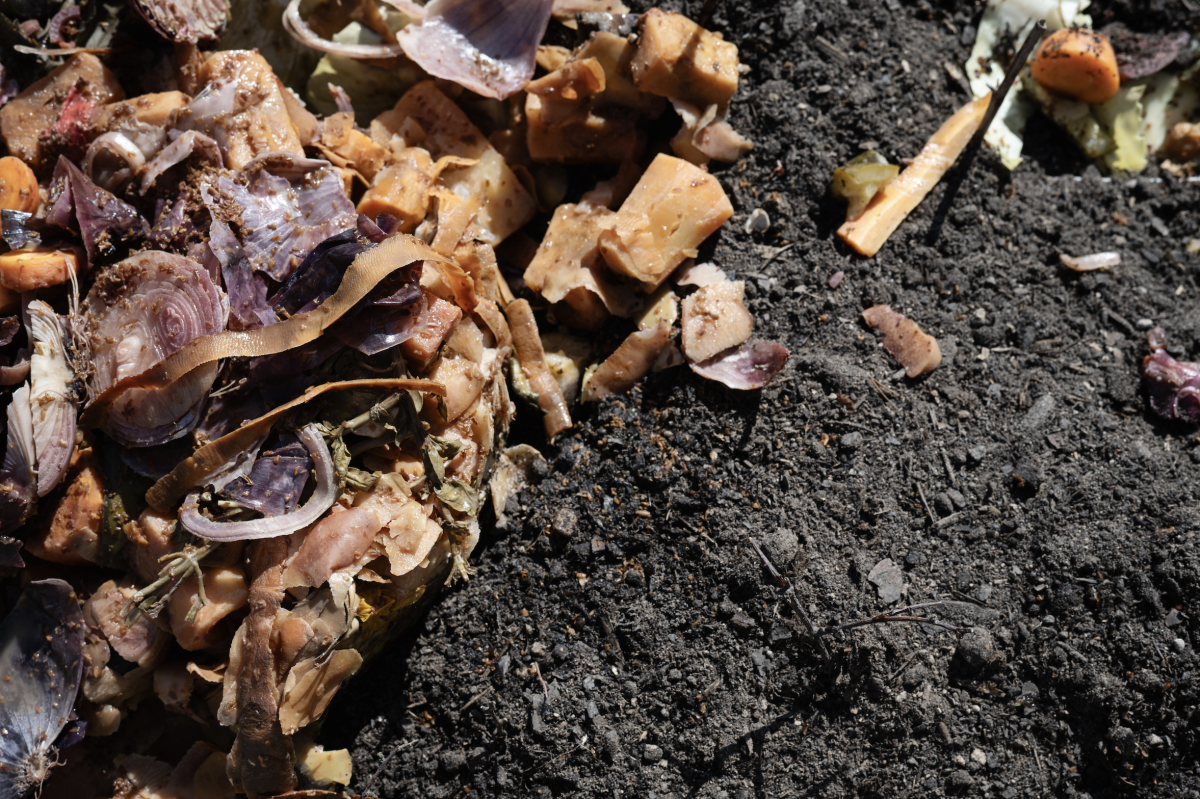
If you’re a gardener or into homesteading, you know that compost is basically black gold. Your entire garden will perform better because of it.
But, if you’re like me and you live anywhere near wildlife (and even if you don’t think you are), whether that’s bears, rats, raccoons, etc, etc., then composting can turn into a nightmare very quickly.
Overall, it’s the right thing to do for your garden and the earth in general, but it’s scary knowing that you could have a zoo of potentially dangerous and disease-ridden animals flocking into your yard. I learned this the hard way, and didn’t even think about it until we found a bear on our property over and over again.

From that point on, we made sure that we did every last thing to compost responsibly, without inviting every hungry creature in a five mile radius over for dinner. So here’s what’s worked for us:
Why your compost pile is attracting so many animals
I think we all know that there are many animals that can smell food and scraps from miles away.. literally.
A bear’s sense of smell is 7x better than a bloodhound’s, so I have to be honest and say that you have your work cut out for you if you have bears in the area. But it’s worth it!

And bears aren’t picky either, so after hibernation in the spring and in the fall before they retreat to their dens, they’re actively looking for the most calories with the least amount of work. And a compost pile is that for them.
On the other hand, rats and mice are looking for food AND shelter, and an untended compost pile can be both. It’s dry, insulated, and warm, and of course, it’s stocked with snacks for them.
So the point of all of this is that the smell is the biggest driving factor for animals invading. Remove the smell and the shelter, and you’ve eliminated most of your problem.

Be VERY picky about what goes in
The easiest thing you can change is being picky about what you put in your compost pile.
If you’re composting anywhere near bears, a lot of the typical composting rules won’t apply to you. For example, meat, fish, and bones are all hard nos. The same goes for dairy, grease, and oils. These are very powerful scent signals and animals will travel to find it.

One thing that surprised me when we started was that fruit peels have the same affect. So think watermelon or cantaloupe rinds.. these are basically candy for bears.
If you’re trying to avoid pesky rodents, leave out any cooked foods, bread, and pasta. Basically, you should keep your pile to veggie scraps, coffee grounds, and yard waste. That leaves out a lot of potential composting materials, but it’s better to be safe than to be fending off your yard from bears, rats, and raccoons. At least that’s how we feel, others may disagree.
Why carbon is the secret to success
Generally, composting comes down to balancing your greens (wet, nitrogen-rich kitchen scraps, basically anything that smells) and your browns (dry, carbon-heavy material like dried leaves, straw, sawdust, or shredded cardboard).

A normal compost pile can run on a 2:1 ratio of browns to greens, but if you have bears, you’ll want to push it to 3:1, and even 4:1 depending on what you’re seeing.
The carbon (browns) smothers the smell of the greens (the smelly stuff) before it can escape. So, every single time you add kitchen scraps to your pile, cover them right away with a layer of browns. Your browns are your smell-proof blanket, so pay attention and use it wisely.

IMPORTANT TIP: Bury fresh food scraps in the center of the pile so it’s not near the edges, and cover it with four to six inches of browns. That center spot is also where your pile is hottest, so things will break down faster instead of sitting there smelling for all to smell.
Location matters
This one matters A LOT, especially for rodents.
Rats and mice are prey animals, so they like staying close to edges and cover, which is why you’ll usually spot one along a fence line or ducking under a pile of leaves.
Knowing that, we recommend putting your compost bin out in the open at least five feet from buildings, sheds, or fences. You should also keep the area around it clear of brush and debris. That exposure makes them feel like an owl or hawk could be watching, which makes them more wary of trying their luck.

If you have a stockpile of dry leaves or garden trimmings that you’re saving to use as browns, keep that in a second bin or a covered container instead of a loose pile, otherwise that stockpile can become home to rodents quickly, too.
And weirdly enough, foot traffic does helps, so a compost pile that’s near a path where people walk by regularly is much less appealing than one that’s tucked into a corner of the yard.
Keep it hot and keep it active
A hot compost pile is not the place for rodents to nest in, and this helps break down food waste fast so it’s not sitting around as bait. Rodents want somewhere warm and dry to raise their young; a pile that’s active is neither of those things.

To keep your pile hot and active, you need plenty of nitrogen-rich greens (grass clippings, kitchen scraps, coffee grounds), enough moisture, and regular turning. You’re aiming for that pile to feel warm a few inches in.
Turning matters for keeping away rodents, too. A pile that gets turned is not a safe spot for any animal. To be clear, you don’t have to turn it daily. But even once a week, or once every couple weeks, makes a big difference.
Not only will this help you make better compost, but it’ll keep the pests away.
Physical barriers can help
If you’re doing everything we already mentioned, but you’re still struggling, physical barriers can help.
One of the best ways to keep rodents out is by using hardware cloth, a wire mesh with quarter-inch to half-inch openings, and lining the bottom of your bin. This will block rats and mice from burrowing up from underneath, but it will still let worms, bugs, and other beneficial creatures get in.

Another good option is a tumbler composter. A tumber composter is enclosed, which makes it tough for animals to get in, and it keeps smells contained, as long as it has a strong latch.
Another thing worth trying is adding garden lime into the pile to help neutralize fruity smells that tend to draw animals in.
And if bears are your concern, an electric fence can also work. This is for extreme cases, of course. You certainly don’t need one. But if you decide to go this route, you’ll need at least 6,000 volts with wires set around 10, 20, and 30 inches off the ground.
And finally, if you’re building a pallet-style bin, most people are tempted to fully enclose the sides, but don’t do it. When you leave gaps in the bin, it lets light and air move through, and those are things rodents avoid. A fully boxed-in bin with no airflow is more inviting to them.

IMPORTANT TIP: If you’re going to use other methods of getting rid of rodents, we don’t recommend using poison. Instead, consider live traps, just make sure you place them carefully so you aren’t catching anything you didn’t mean to. Using poison isn’t good for the ecosystem in general, and tends to harm animals that are important for maintaining your garden and yard.
The freezer trick
The freezer trick is my favorite tip of all, and it’s useful in early spring when animals are out and actively looking for food.
Start collecting your kitchen scraps in a bag or bucket in your freezer. While they’re frozen, they don’t produce a smell. From there, once you’ve got a solid frozen block and a good pile of browns ready, bury the block in the hot center of your pile. It thaws and breaks down safely underground.
Another completely different approach
If you’re dealing with a lot of rodent, or you just want to be able to compost meat, dairy, and cooked food safely, there are a few alternatives.

The first method is through Bokashi, which is a fermentation method where you use a bucket and inoculated bran. It can process almost anything, including meat and oils, and once it’s fermented it’s safe to add to your outdoor pile.
Another is vermicomposting, or worm bins. These work well for most food scraps (skip the meat and dairy though) and produces rich worm castings for your potting mix.
Both have startup costs, but you can start small with a kit and go from there.
An finally, trench composting is the low-tech option. You just dig a hole or a trench somewhere in the garden, bury your scraps a good foot or two down, and let the soil do the work. It’s slower and requires a bit more physical labor, but there’s nothing for an animal to smell or dig up if it’s buried deep enough.

What if something’s already moved in?
If you pull back the lid one day and find a rat’s nest or a mouse family, don’t panic (easier said than done), and don’t just dump the whole pile in the trash.
Instead, empty the bin out, deal with the animals, and think about what could have caused them to move in in the first place. Usually it’s not enough browns, a bin sitting somewhere shady and undisturbed, or a big opening in the bottom. Try fixing what you think is wrong first before giving up.

The Bottom Line
You do not have to choose between having a great garden and keeping your yard free of unwanted wildlife visitors. You can have both.
To do that, just be picky about what goes in your compost pile, get your carbon ratio right, bury your scraps in the center, pick a smart location, and add physical barriers if needed. If you do even half of these things, you’re already ahead of most backyard composters.

Erie is the owner and author of Everywhere Ontario. She’s lived and traveled around Ontario for over 30 years, visiting small towns and big cities from the shores of Lake Erie to the crisp northern air of Hearst along the Trans-Canada Highway. She is passionate about maximizing fun and supporting local tourist businesses and is always looking to provide the best recommendations to her fellow Ontario travelers. Read more about Erie here.